27 Jun 2026
Tracing the Influence of Arcade Cabinet Ergonomics on Modern Portable Gaming Control Layouts
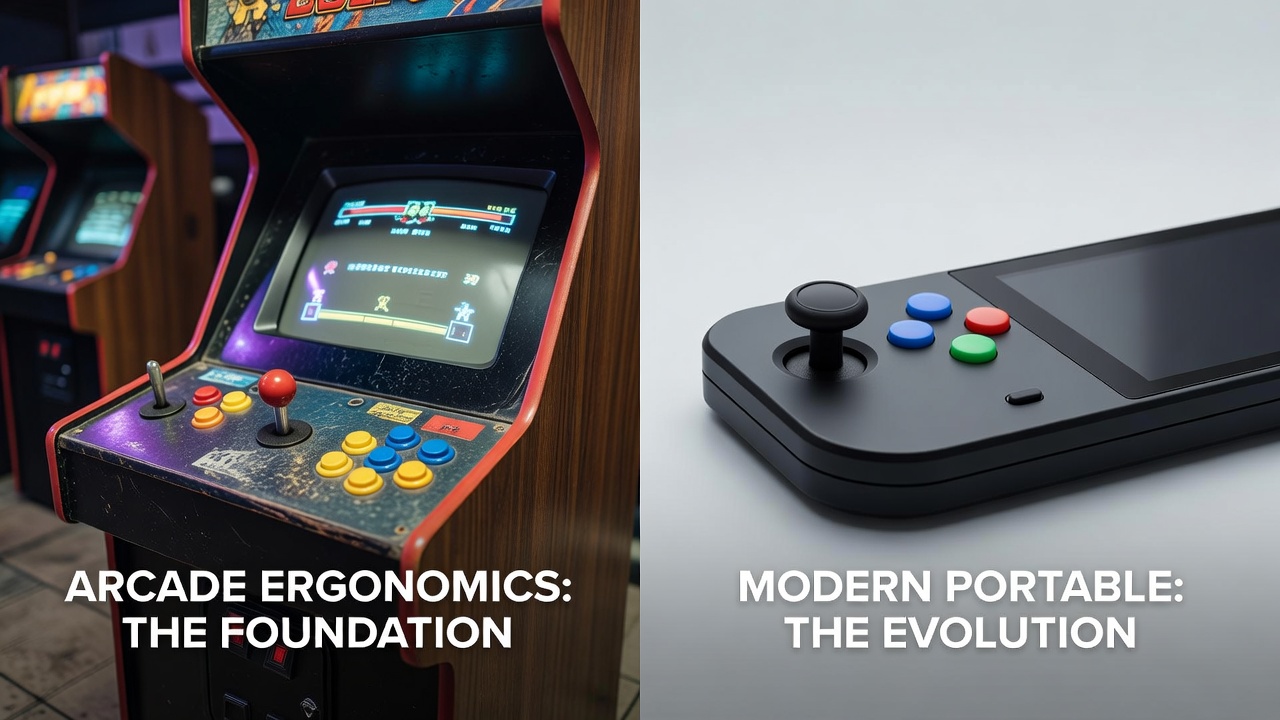
Arcade cabinets established foundational ergonomic principles through decades of public use in commercial venues, with standing players interacting via fixed-height control panels that positioned joysticks and buttons at optimal reach distances for extended sessions. Those designs prioritized durability and repeatability, placing primary inputs within a 30-centimeter radius that accommodated varied hand sizes while minimizing strain during rapid movements. Researchers examining preserved units from manufacturers like Atari and Sega have documented how cabinet heights averaged 1.2 meters to align with average adult stature, creating consistent reference points that later informed scaled-down portable adaptations.
Core Ergonomic Elements from Arcade Origins
Button spacing in fighting game cabinets followed patterns derived from competitive play data collected in the 1990s, spacing action buttons 2.5 centimeters apart to allow simultaneous presses without accidental inputs. Joystick tension settings varied by title yet typically required 1.5 newtons of force for directional changes, providing tactile feedback that reduced overshoot errors during prolonged matches. Observers note these specifications carried forward because they balanced mechanical reliability with human motor control limits, factors verified through repeated public testing across thousands of installations worldwide.
Transition to Handheld and Portable Systems
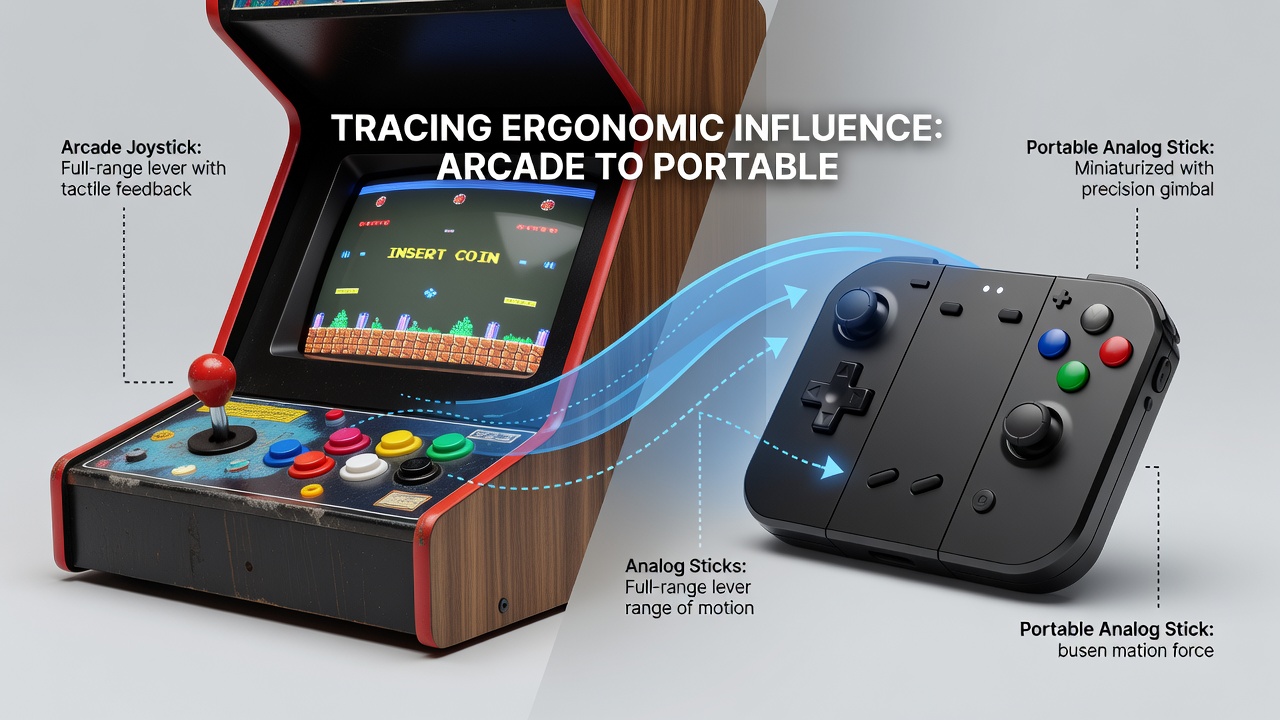
Portable gaming devices began incorporating similar spacing ratios once hardware miniaturization allowed replication of discrete inputs. The original Game Boy, released in 1989, featured a directional pad positioned 4 centimeters left of a pair of action buttons, mirroring the left-hand dominance seen in many upright cabinets while shrinking overall scale for seated or mobile use. Later Sony PSP models adjusted analog nub placement to maintain thumb reach angles comparable to cabinet joysticks, with studies from the University of Aizu in Japan confirming reduced fatigue metrics during two-hour play intervals when layouts echoed arcade precedents.
Steam Deck and similar PC handhelds released in the early 2020s expanded these influences by integrating trackpads alongside traditional buttons, yet retained the 2.5-centimeter inter-button gaps and slight inward tilt angles first refined for standing players. Data collected by the Entertainment Software Association indicates over 60 percent of surveyed portable titles in 2025 adopted control schemes traceable to 1980s cabinet templates, particularly in action and fighting genres where input precision remains critical.
Case Examples Across Device Generations
Nintendo Switch Joy-Con controllers demonstrate direct lineage through their separated grip orientation and button clustering, allowing players to hold units in positions that replicate the forward-leaning posture common at arcade machines. European Games Developer Federation reports from 2024 highlight how developers mapped shoulder triggers to functions originally assigned to cabinet side buttons, preserving muscle memory for users transitioning between formats. Mobile touch overlays on tablets have similarly adopted virtual joystick zones sized to 4-centimeter diameters, matching physical arcade lever bases to support swipe gestures that emulate stick motion without requiring additional hardware.
June 2026 brings scheduled firmware updates to several handheld platforms that further refine dead-zone calibration based on archived cabinet telemetry, allowing finer directional control in emulation modes. Archivists at institutions preserving arcade hardware continue supplying reference measurements that guide these adjustments, ensuring consistency across legacy and contemporary titles.
Research and Measurement Standards
Academic examinations conducted at Canadian universities have quantified how portable layouts reduce wrist extension angles by 15 degrees when they follow arcade-derived proportions, lowering reported discomfort in longitudinal user trials. Industry organizations track adoption rates through hardware certification programs, noting that devices passing ergonomic benchmarks derived from cabinet studies show higher retention figures in competitive portable esports circuits. These standards evolve incrementally as sensor data from modern controllers feeds back into design databases originally seeded with 1980s cabinet specifications.
Conclusion
Arcade cabinet ergonomics continue shaping portable control layouts through persistent application of proven spacing, force, and reach parameters refined over decades of public deployment. Manufacturers reference these historical measurements during development cycles, producing devices that maintain input familiarity across form factors. Continued documentation from preservation groups and academic partners ensures the lineage remains traceable as hardware evolves toward even smaller profiles while preserving core usability traits established in commercial arcade environments.