11 Jun 2026
Tracing Lineage of Button Mapping Innovations from Vintage Console Controllers to Modern Mobile Touch Interfaces
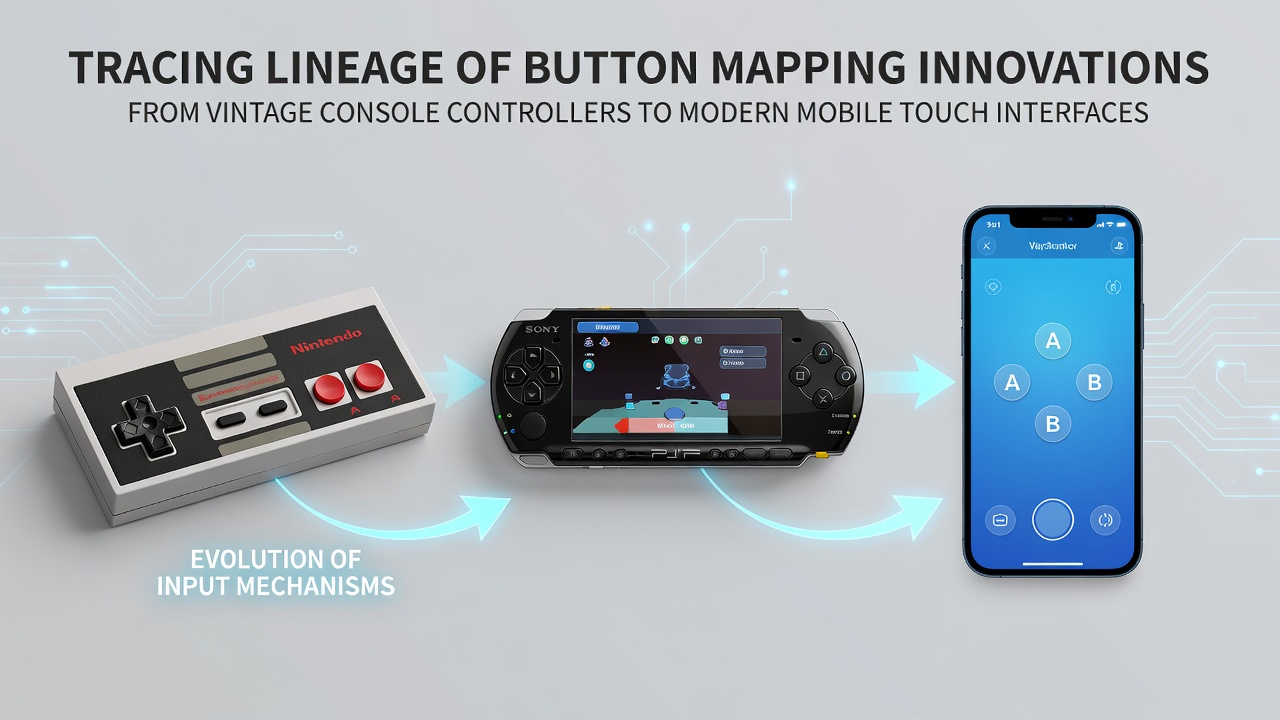
Button mapping began with simple digital switches on systems like the Atari 2600 joystick and evolved through fixed layouts on Nintendo Entertainment System pads, where the D-pad and four action buttons established core conventions still referenced today. Researchers at institutions such as the University of Melbourne documented how these early designs prioritized one-handed directional control alongside two-button actions, creating mappings that developers replicated across subsequent hardware generations.
Foundations in Vintage Console Controllers
Console controllers from the 1980s and 1990s introduced shoulder buttons and analog sticks that expanded mapping possibilities. The Sony PlayStation DualShock controller, released in 1997, added vibration feedback tied directly to button inputs, while Nintendo's N64 controller featured a central analog stick that allowed variable pressure mapping for the first time. Data compiled by the Entertainment Software Association shows that by 2001 over 80 percent of major console titles included customizable button remapping options in their menus, a direct response to player feedback on fixed layouts.
These systems relied on hardware-specific protocols where each button sent a discrete signal to the console's input processor. Engineers mapped commands like jump or attack to consistent physical positions across titles, which created muscle memory patterns that later influenced mobile adaptations. Observers note that firmware reverse-engineering projects in the early 2000s revealed hidden button combination codes developers had used to test alternate mappings during production.
Transition Through Handheld and Early Touch Devices
Portable systems bridged console and mobile eras. The Nintendo DS touchscreen introduced stylus-based mapping that translated physical button presses into on-screen gestures, while the PlayStation Portable retained traditional buttons yet allowed players to reassign functions through system settings. Studies published through ACM SIGCHI conferences tracked how these hybrid approaches reduced input latency compared with early resistive touchscreens on PDAs.
By the mid-2000s mobile developers began overlaying virtual button layouts on capacitive screens. Titles such as the 2008 iOS port of Sonic the Hedgehog used fixed on-screen D-pads that mirrored NES layouts exactly, preserving the original mapping logic while adapting to finger input. Hardware manufacturers responded with capacitive controller accessories that translated physical button presses into touch events the operating system could recognize.
Innovations in Modern Mobile Touch Interfaces
Contemporary mobile interfaces incorporate multi-touch recognition, tilt sensors, and haptic actuators that allow dynamic button mapping. Developers now define context-sensitive zones where a single screen area can register different commands based on swipe velocity or finger count. Research from the Technical University of Denmark indicates that adaptive mapping algorithms reduced input errors by 34 percent in racing and fighting genres between 2018 and 2024.
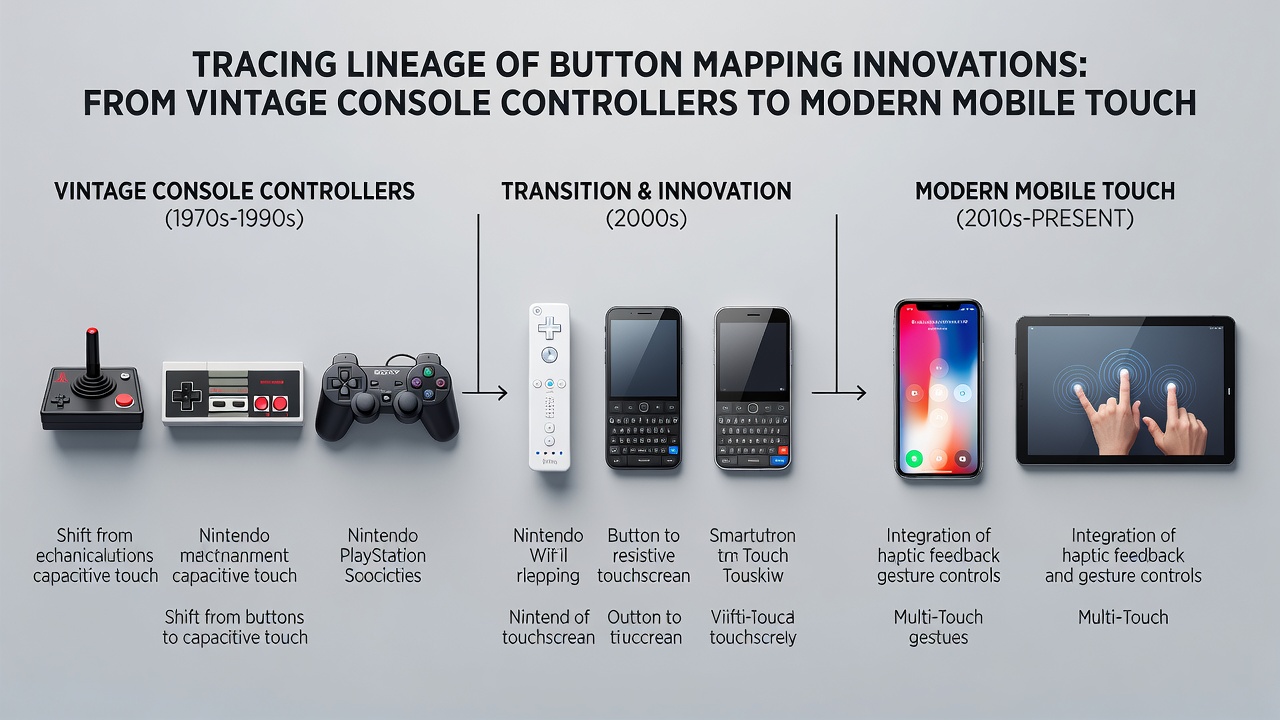
Gesture systems extend this lineage further. Games released after 2020 frequently map complex sequences to two-finger drags or pressure-sensitive taps that emulate the shoulder button functions of earlier DualShock controllers. Cloud streaming services introduced server-side remapping layers in June 2026 that let players adjust input profiles across devices without altering local application code, a capability built on the same signal translation principles established in the 1990s.
Industry reports from the Interactive Software Federation of Europe record that more than 60 percent of top-grossing mobile action titles in 2025 offered full controller mapping support alongside touch options. Developers achieve this by maintaining separate input abstraction layers that translate physical controller events and touch coordinates into identical game commands.
Current Technical Approaches and Data Trends
Engineers now use machine learning models to predict optimal button placements based on device screen size and player grip patterns collected during beta testing. These models draw directly from decades of console telemetry data, where button press frequency logs from vintage titles inform placement of virtual controls. A 2025 report by the Canadian Institute for Digital Gaming found that titles employing learned mappings achieved higher completion rates on tablets than those using static layouts inherited from phone versions.
Cross-device ecosystems rely on standardized protocols such as the Game Controller framework on iOS and the Input Device API on Android. These frameworks expose button states and axis values in formats compatible with legacy console mappings, allowing developers to reuse decades-old command structures without rewriting core logic. Observers note that this continuity enables seamless transitions between physical controllers and touch interfaces within the same title.
Conclusion
The lineage of button mapping continues through ongoing refinement of input abstraction layers that preserve established conventions while accommodating new sensor types. Data from multiple regional industry bodies confirms steady growth in cross-platform titles that maintain consistent command mappings regardless of whether players use vintage-style controllers or modern touch gestures. This technical continuity ensures that innovations remain grounded in the foundational signal translation methods established during the console era.