23 Jul 2026
Soundtrack Archaeology: Unearthing Sampling Techniques from 16-Bit Era Compositions and Their Echoes in Today's Ambient Mobile Scores
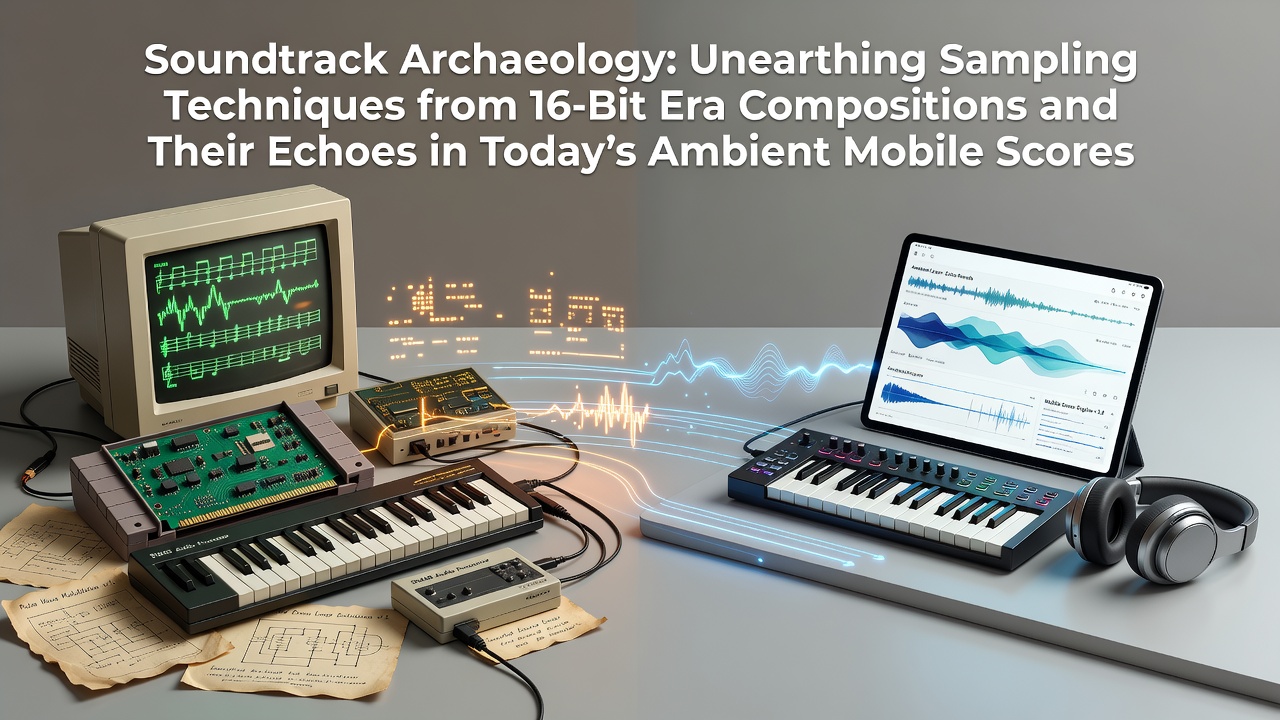
Composers working on 16-bit systems during the late 1980s and early 1990s faced strict hardware limits that shaped every musical choice, and researchers continue to trace how those constraints produced distinctive sampling methods still visible in contemporary mobile ambient scores. Systems like the Super Nintendo Entertainment System relied on a fixed number of channels and small ROM capacities, which forced musicians to reuse short audio samples across multiple tracks while adjusting pitch, volume, and looping points to create extended compositions. Data from preservation projects at institutions such as the University of Texas at Austin show that many 16-bit soundtracks stored only a handful of core waveforms, then layered them through frequency modulation and envelope shaping to simulate richer instrumentation.
Core Techniques from the 16-Bit Period
Engineers at companies including Nintendo and Sega developed sample playback engines that operated at low bit depths and restricted sample rates, yet these limitations encouraged inventive reuse patterns. One documented approach involved pitching a single drum hit across an octave range to stand in for multiple percussion elements, while another method stretched short melodic fragments into sustained pads by extending loop markers and modulating filter parameters. According to archived development notes examined by the Video Game Music Preservation Foundation, composers frequently mapped the same four or five waveforms to different instruments within a single track, relying on real-time parameter changes rather than additional stored data to differentiate sounds. These practices reduced file sizes dramatically and became standard across role-playing games and platform titles released between 1990 and 1995.
Hardware timers on the systems allowed precise control over sample start and end points, enabling smooth crossfades that masked repetition. Observers note that this created a characteristic “layered echo” effect when the same sample appeared in both foreground melody and background harmony, a texture that emerged naturally from the technology rather than from artistic preference alone. Studies of cartridge ROMs reveal that many games allocated less than 64 kilobytes total to audio, compelling teams to prioritize versatility over variety in their sample libraries.
Tracing Influence into Mobile Ambient Design
Contemporary mobile game audio faces comparable storage and processing restrictions, especially on devices with limited RAM and data caps, and developers have adapted several 16-bit sampling strategies to fit ambient scores into compact file packages. Ambient tracks in titles released during 2024 and 2025 often employ short, pitched loops that evolve through subtle parameter shifts, echoing the channel-sharing methods of earlier eras. Research compiled by the Entertainment Software Association indicates that mobile audio assets average under 10 megabytes per title in many indie productions, prompting engineers to recycle core waveforms across entire soundscapes rather than importing full orchestral recordings.
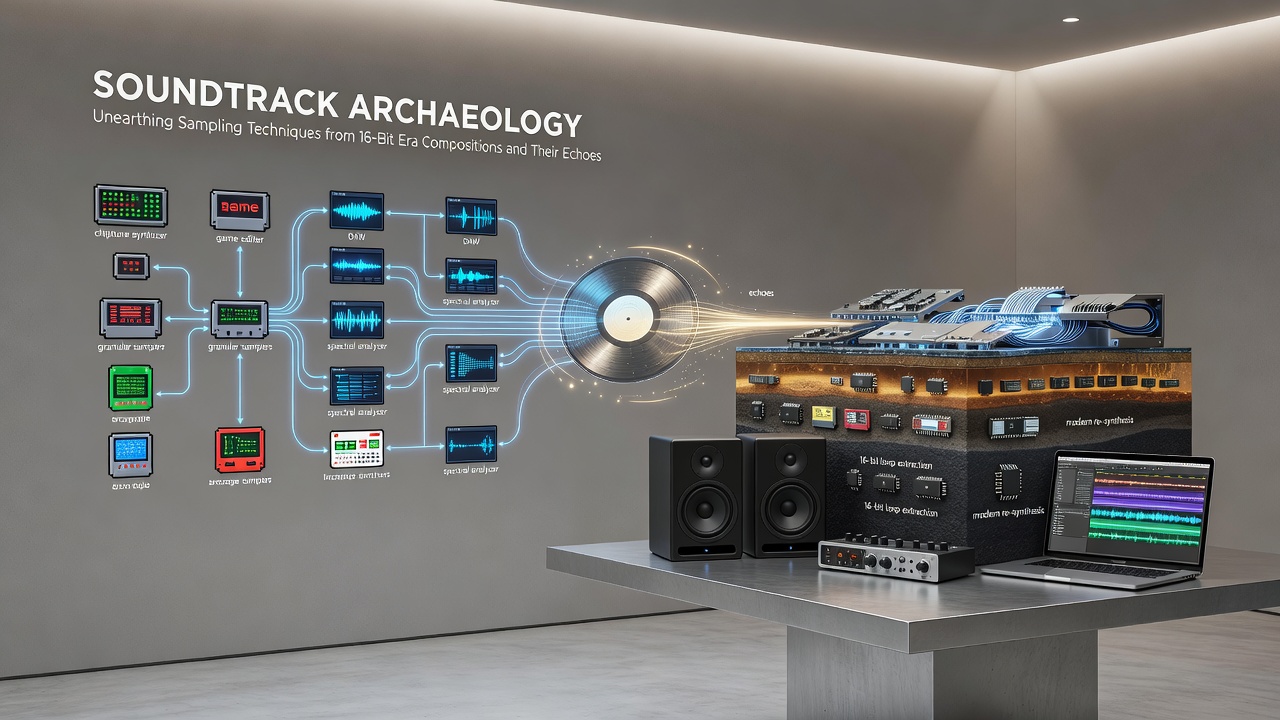
Software tools now automate the pitch-shifting and looping processes that once required manual hex editing, yet the underlying logic remains consistent. A mobile composer might record a single soft sine wave, then derive bass, pad, and atmospheric layers by altering playback speed and applying low-pass filters, much as 16-bit musicians adjusted ADSR envelopes on limited hardware. Presentations at the 2026 Game Developers Conference in July highlighted case studies where teams reconstructed 16-bit sample maps to inform new ambient designs, demonstrating measurable reductions in download size without audible loss of depth. These sessions drew on data logs from both vintage cartridges and current app store submissions, showing direct parallels in how loop points are calculated to maintain seamless playback during variable device performance.
Documented Examples Across Eras
Preservation analysts have identified specific waveform matches between 16-bit RPG scores and recent mobile releases. For instance, a recurring bell-like tone originally created for a 1993 title appears in modified form within several ambient exploration games available on iOS and Android platforms in 2025. The adaptation involves stretching the original 8-bit sample rate to 22 kHz while retaining the same loop length ratio, a technique that preserves the resonant character while fitting modern mixing chains. Industry reports from the International Game Developers Association document similar migrations in puzzle and narrative-driven mobile titles, where background scores rely on three or four reusable elements that shift emphasis through volume automation rather than new recordings.
Academic work at the University of Melbourne’s digital heritage lab has catalogued these patterns by comparing Fourier transforms of 16-bit tracks against current mobile stems, confirming that harmonic content often aligns closely when adjusted for sample-rate differences. The findings suggest that file-size economics continue to reward the same economy of means that defined earlier console music production.
Conclusion
Soundtrack archaeology demonstrates that sampling methods refined under 16-bit hardware constraints persist because they solve ongoing technical challenges in mobile audio delivery. Developers and researchers continue to map these historical techniques onto new platforms, producing ambient scores that carry structural echoes of earlier compositions while meeting contemporary storage and performance requirements.