20 Jul 2026
Seasonal Event Design Patterns in Free-to-Play Battle Royales Drawing from Traditional Festival Customs Worldwide
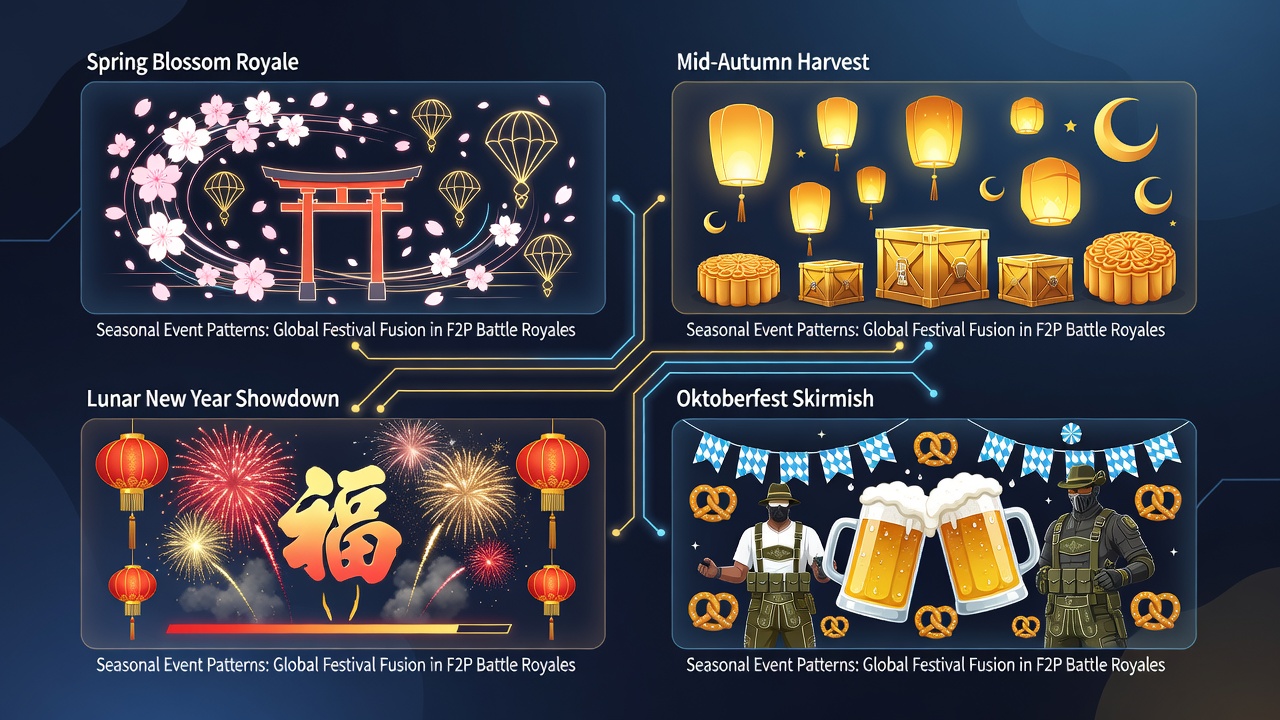
Free-to-play battle royales integrate seasonal events that mirror traditional festival customs from regions across Asia, Europe, Latin America, and beyond, and developers draw on these patterns to structure limited-time modes, cosmetics, and gameplay loops that align with cultural calendars. Games such as Fortnite, Apex Legends, and PUBG Mobile release updates timed to holidays like Lunar New Year, Carnival, and harvest festivals, where core mechanics expand through temporary maps, themed challenges, and reward systems that echo communal rituals rather than invent isolated features.
Core Design Patterns Rooted in Festival Structures
Design teams replicate procession-style events by introducing rotating objectives that guide player groups through shared spaces, much like parades in Brazilian Carnival or lantern festivals in East Asia, and these patterns appear as multi-stage quests where squads collect items or defend zones in sequence. Data from industry reports indicates that such structures increase session lengths during event windows because players navigate layered tasks that reward coordinated movement over individual survival alone.
Color palettes and particle effects follow festival iconography, with reds and golds dominating Chinese New Year updates while vibrant masks and floats appear during Carnival-inspired modes, and these visual layers sit atop standard battle royale loops without altering core gunplay or movement. Researchers at institutions like the University of California, Irvine, have documented how these elements borrow from real-world customs to create recognizable visual shorthand that players decode quickly across regions.
Regional Adaptations in Event Mechanics
European harvest traditions influence fall events through crop-gathering side activities that feed into larger elimination rounds, whereas Diwali-inspired updates in South Asian markets feature light-based signaling tools that temporarily reveal enemy positions during night cycles on modified maps. In July 2026, several titles expanded these patterns with cross-server community challenges that tracked collective progress toward unlocking new zones, drawing directly from midsummer fire festivals observed in Nordic and Mediterranean cultures.
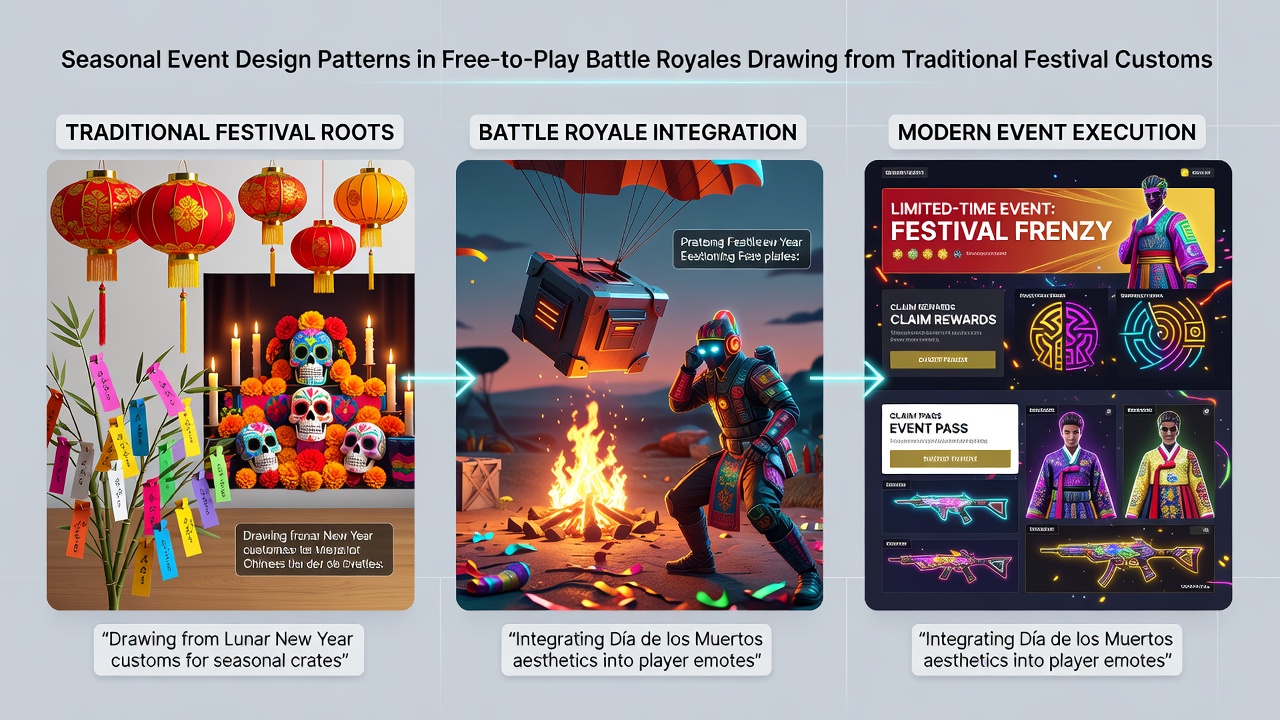
Mechanics often incorporate exchange systems modeled on gift-giving customs, where players trade event tokens for limited cosmetics or emotes, and this mirrors practices seen during Japanese Obon or Mexican Día de los Muertos celebrations. Figures from the Entertainment Software Association show that token economies in free-to-play titles generate measurable spikes in daily active users when tied to familiar cultural motifs rather than generic themes.
Implementation Across Major Titles
Battle royale developers schedule events around overlapping global calendars so that one region’s major festival coincides with another’s secondary observance, and this approach appears in Apex Legends’ simultaneous rollout of Lunar New Year cosmetics alongside early spring renewal modes inspired by Persian Nowruz. Limited-time arenas incorporate temporary terrain changes such as floating platforms during water festival events or maze-like structures during labyrinth traditions, yet these additions reset cleanly at event close to preserve baseline map integrity.
Audio cues and music tracks integrate percussion and chant elements drawn from source festivals, which heightens immersion without requiring players to learn new controls. Observers note that these audio layers connect to the same progression systems used in standard seasons, allowing seamless transition between event and non-event play.
Data Patterns and Player Migration Trends
Server logs from multiple platforms reveal that populations shift toward battle royales during festival periods when events reference local customs, and archived records from phased-out mobile titles show similar migration routes into current arena ecosystems. Studies published by European research networks tracking digital entertainment confirm that retention metrics rise when design patterns replicate communal gathering mechanics, such as group dances or shared feasts translated into cooperative mini-games.
Analytics tools expose how players who engage with culturally anchored events return at higher rates for subsequent seasons because the familiar structure reduces onboarding friction. This pattern holds across titles regardless of specific regional focus, since the underlying festival logic—procession, exchange, and spectacle—translates consistently into digital formats.
Conclusion
Seasonal event design in free-to-play battle royales continues to evolve by mapping traditional festival customs onto existing gameplay frameworks, and the result produces recurring patterns of procession objectives, exchange economies, and visual signaling that operate across cultural boundaries. As updates scheduled through 2026 demonstrate, these adaptations maintain player engagement by aligning digital calendars with worldwide observances while preserving the competitive integrity of core battle royale systems.