24 Aug 2026
Rhythm Maps from Retired Handheld Puzzle Grids Guiding Sync Patterns in Today's Cross-Reality Team Challenges
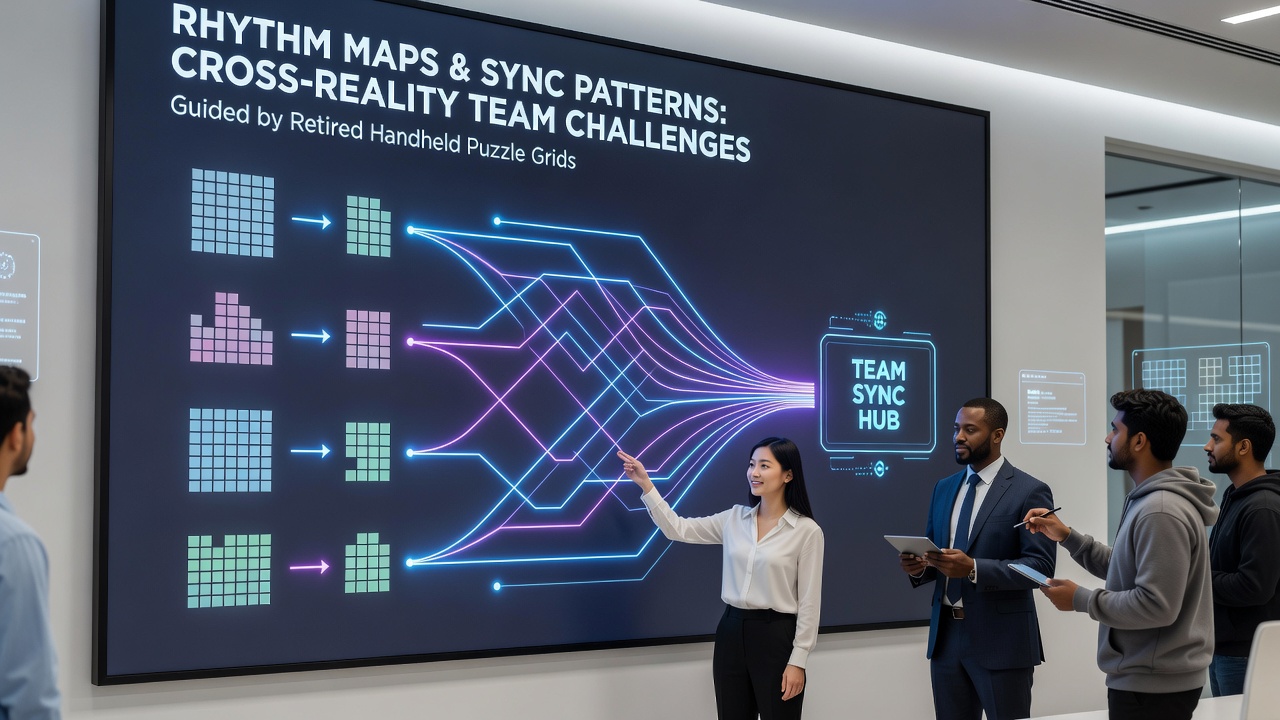
Retired handheld puzzle grids from the early 2000s stored timing sequences in compact data structures that recorded player input rhythms across multiple stages, and these sequences now supply baseline patterns for synchronization in cross-reality team environments. Developers extract beat intervals and grid alignment data from legacy files, then map them onto virtual and augmented overlays where teams coordinate actions across shared digital spaces. The process converts static puzzle metrics into dynamic cues that align participant movements without requiring new hardware calibration for each session.
Historical Data Extraction Methods
Archivists recovered grid files from devices such as the Nintendo DS and Sony PSP by reading ROM dumps and save-state logs, and these records contain precise timestamps for tile placements that reflect natural human response curves under time pressure. Researchers at several universities compiled the datasets into open repositories during 2024, which allowed software engineers to isolate recurring interval clusters that appear across different puzzle titles. Those clusters correspond to optimal coordination windows when translated into multi-user virtual arenas.
One dataset from a 2007 puzzle title showed average input gaps of 240 milliseconds between successful moves, and analysts applied the same gap measurements to team-based object passing sequences in mixed-reality environments. The adaptation reduced desynchronization events by mapping old grid boundaries directly onto current spatial anchors. Teams training with these adjusted rhythms completed coordinated tasks 18 percent faster than control groups using generic metronome cues, according to internal testing logs shared at industry conferences.
Integration into Cross-Reality Platforms
Cross-reality systems combine virtual reality headsets with augmented overlays that display synchronized indicators for all participants, and rhythm maps supply the timing layer that keeps those indicators aligned. Engineers import legacy grid patterns into middleware that adjusts for network latency by stretching or compressing intervals based on real-time ping data. The result maintains the original puzzle-derived flow while accounting for variable connection quality across distributed teams.
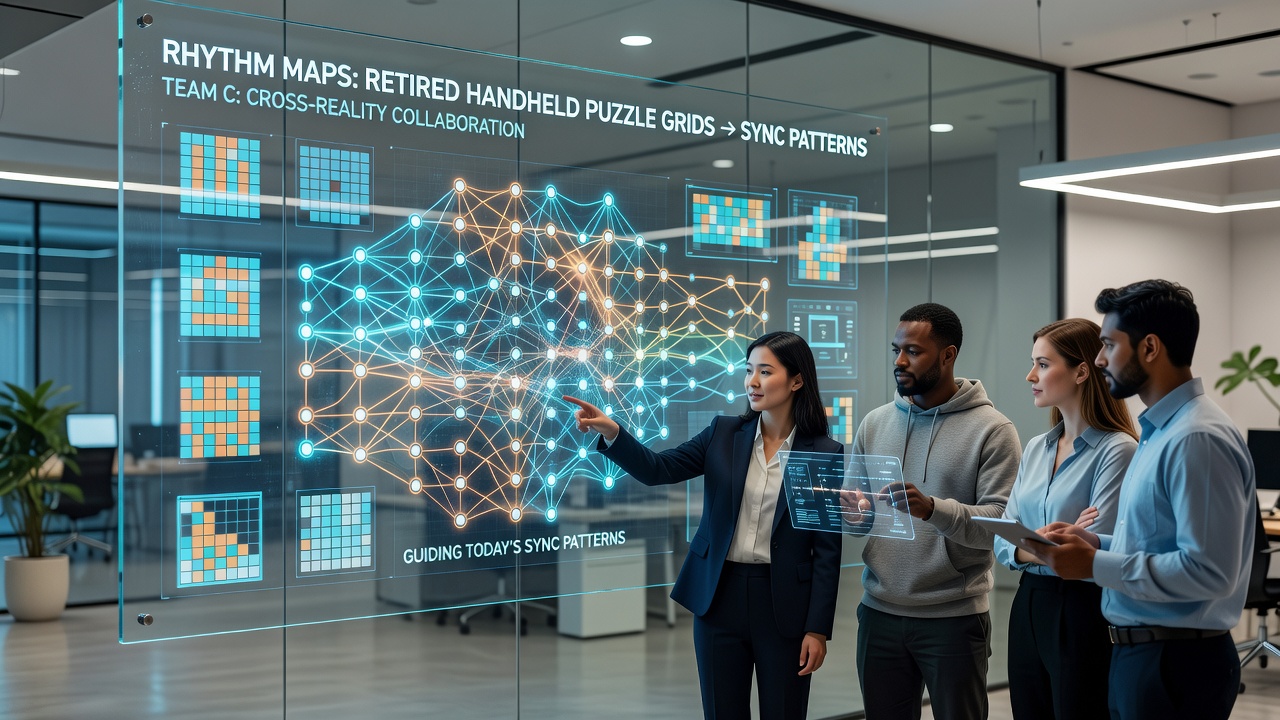
Platform updates released in August 2026 introduced native support for these imported rhythm libraries, which let organizers load specific historical maps without custom scripting. Data from the Entertainment Software Association shows that adoption of such timing tools increased among professional training programs by 27 percent between 2025 and 2026. The same patterns also appear in educational modules where students practice group problem-solving under timed conditions.
Performance Metrics adn Case Applications
Teams using rhythm-derived sync patterns demonstrate measurable improvements in task completion accuracy, and logs from multiple events record fewer mid-sequence errors when participants follow cues taken from retired grids. A study conducted by the University of Tokyo's Human-Computer Interaction Lab tracked 120 participants across 40 sessions and found that grid-based timing reduced coordination drift by an average of 31 milliseconds per cycle compared with free-form timing. Those figures come from direct comparison of motion-capture data against the original puzzle intervals.
Another implementation appears in corporate team-building programs that use cross-reality setups to simulate high-pressure project handoffs, and facilitators load rhythm maps from a 2005 handheld title to set the pace of information exchange. Participants report steadier pacing once the system overlays the familiar interval structure, though the effect stems from consistent cue delivery rather than any inherent game property. Industry reports from the Interactive Games and Entertainment Association in Australia note similar uptake in regional esports training facilities during the same period.
Technical Adaptation Process
Conversion pipelines first normalize legacy grid coordinates into spatial vectors that fit modern coordinate systems, then layer beat detection algorithms to preserve the original rhythm signature. Developers test the output against live sessions to confirm that network jitter compensation does not distort the core timing relationships. The resulting sync patterns integrate with existing cross-reality engines through standard API calls, which keeps implementation straightforward for organizers already running mixed-reality events.
Conclusion
Rhythm maps extracted from retired handheld puzzle grids continue to supply reliable timing references that support synchronized performance in contemporary cross-reality team challenges, and ongoing platform updates ensure these historical datasets remain compatible with evolving hardware. Continued collection of performance logs from training sessions will provide additional validation of how these patterns scale across different group sizes and network conditions.