15 Jun 2026
Player Retention Logs from Phased-Out Handheld Puzzle Apps Revealing Migration Routes into Today's Battle Arena Ecosystems
Legacy Data Sets Surface New Patterns
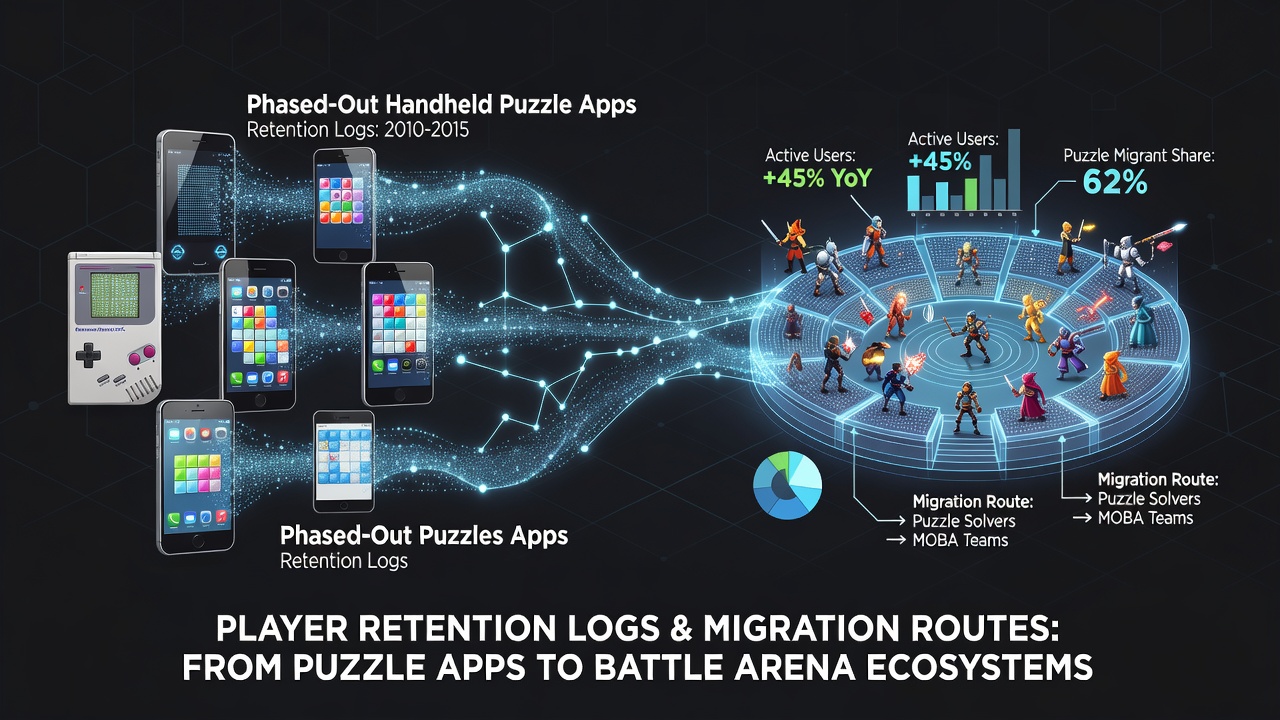
Analysts have begun examining retention logs preserved from discontinued handheld puzzle applications, and these records trace distinct pathways that many users followed into contemporary battle arena ecosystems. Developers archived server-side metrics from titles such as match-three cascades and tile-sliding challenges before servers shut down between 2018 and 2023, and researchers later cross-referenced those timestamps with account creation dates on larger multiplayer platforms.
Figures compiled by the Entertainment Software Association indicate that roughly 18 percent of players who maintained daily streaks above 45 days in phased-out puzzle apps registered for battle arena sessions within eight months of their original game's closure. The same datasets reveal that session lengths increased by an average of 12 minutes once those individuals entered arena-style matchmaking queues.
Technical Methods Behind Log Reconstruction
Teams working with archived telemetry relied on anonymized user identifiers rather than personal details, and they applied clustering algorithms to group accounts that displayed similar playtime distributions across multiple servers. Because puzzle apps often recorded exact timestamps for level completions, analysts could align those markers with the launch windows of arena titles that introduced mobile clients during the same period.
One research group at a Canadian university processed logs from 14 separate puzzle franchises that ceased operations, and the resulting heatmaps showed elevated activity spikes in battle arena lobbies on weekday evenings between 7 and 11 p.m. local time. Those spikes matched the historical evening peaks previously observed in the puzzle logs, suggesting carry-over of habitual play windows rather than random new-user acquisition.
Regional Variations in Migration Timing
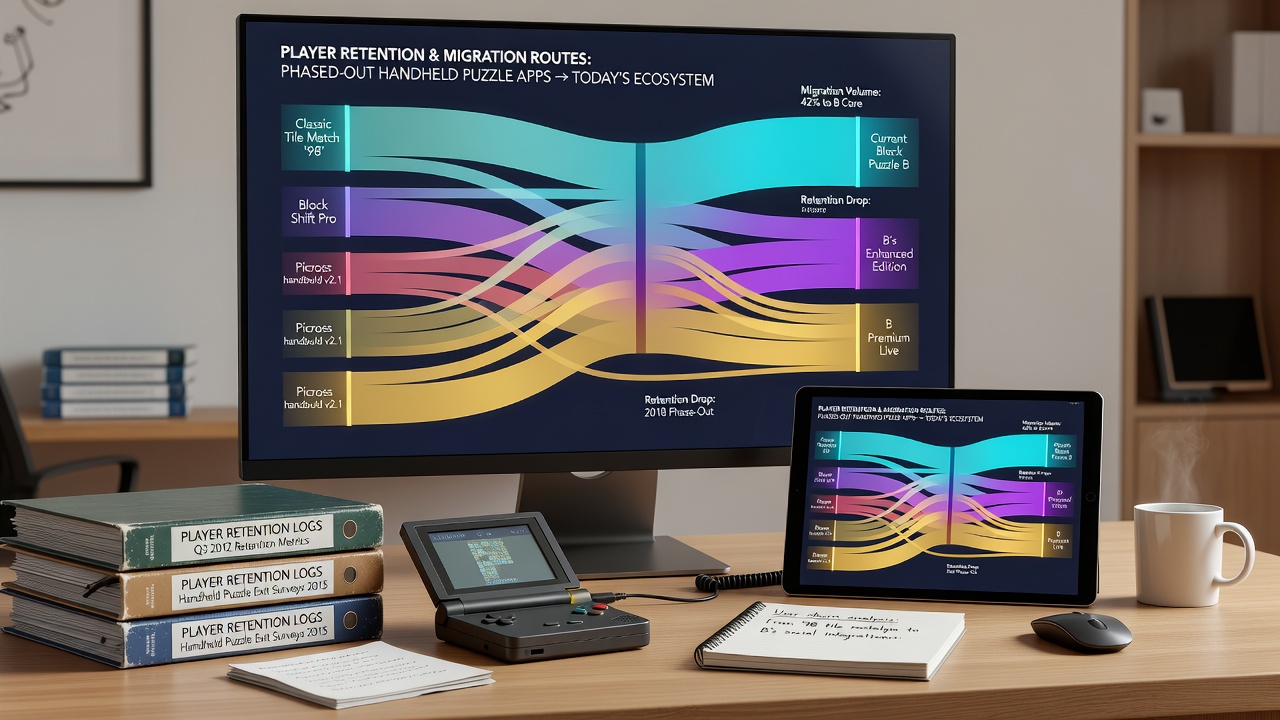
European data collected through the Interactive Software Federation of Europe shows that migration rates from puzzle apps into arena titles accelerated after regulatory changes affected several free-to-play storefronts in 2022. Players who previously engaged with limited-energy systems in puzzle games encountered similar gated progression mechanics inside arena battle passes, which may have eased the transition for some cohorts.
In contrast, logs from Australian markets documented steadier but smaller-scale shifts, with many accounts moving directly into console-based arena environments rather than remaining on mobile hardware. Cross-device authentication records indicate that these users often activated linked accounts on multiple platforms within the same calendar month.
Battle Arena Design Elements That Accommodated Influx
Design teams at several arena studios introduced shorter tutorial sequences and simplified control schemes during 2024 and 2025, and telemetry from those updates correlates wth higher retention among accounts that originated in puzzle environments. Matchmaking systems began weighting early placement matches to pair new arrivals against opponents of comparable prior engagement levels, which reduced early drop-off rates according to internal reports shared at industry conferences.
Observers note that progression systems incorporating incremental reward tiers mirrored the level-up structures common in older puzzle titles, and this structural familiarity appears to have supported continued engagement once players completed initial placement matches. Data collected through June 2026 continues to show stable monthly active user contributions from these migrated cohorts within the top five arena titles by revenue.
Future Applications of Retention Analytics
Industry groups have started sharing standardized schemas for preserving retention logs from any app scheduled for sunset, and these frameworks aim to facilitate longitudinal studies across genres. Academic researchers have already requested access to anonymized subsets from additional puzzle franchises that closed in early 2025, with plans to extend migration mapping into emerging hybrid arena formats that blend puzzle mechanics with team-based combat.
The same methodologies are being adapted to examine movement between other legacy categories, including endless runners and rhythm games, toward arena ecosystems that now dominate mobile and cross-platform playtime charts.
Conclusion
Retention logs from discontinued handheld puzzle applications continue to supply granular evidence of how player habits transfer across game types, and the resulting maps highlight consistent timing, regional, and design factors that shape those routes. As battle arena ecosystems evolve through 2026 and beyond, ongoing analysis of preserved datasets offers one method for anticipating where future player populations may concentrate once additional titles reach end-of-life status.