15 Aug 2026
Player Forums Reconstructing Balance Changes from Canceled Competitive Arena Prototypes Using Old Patch Notes
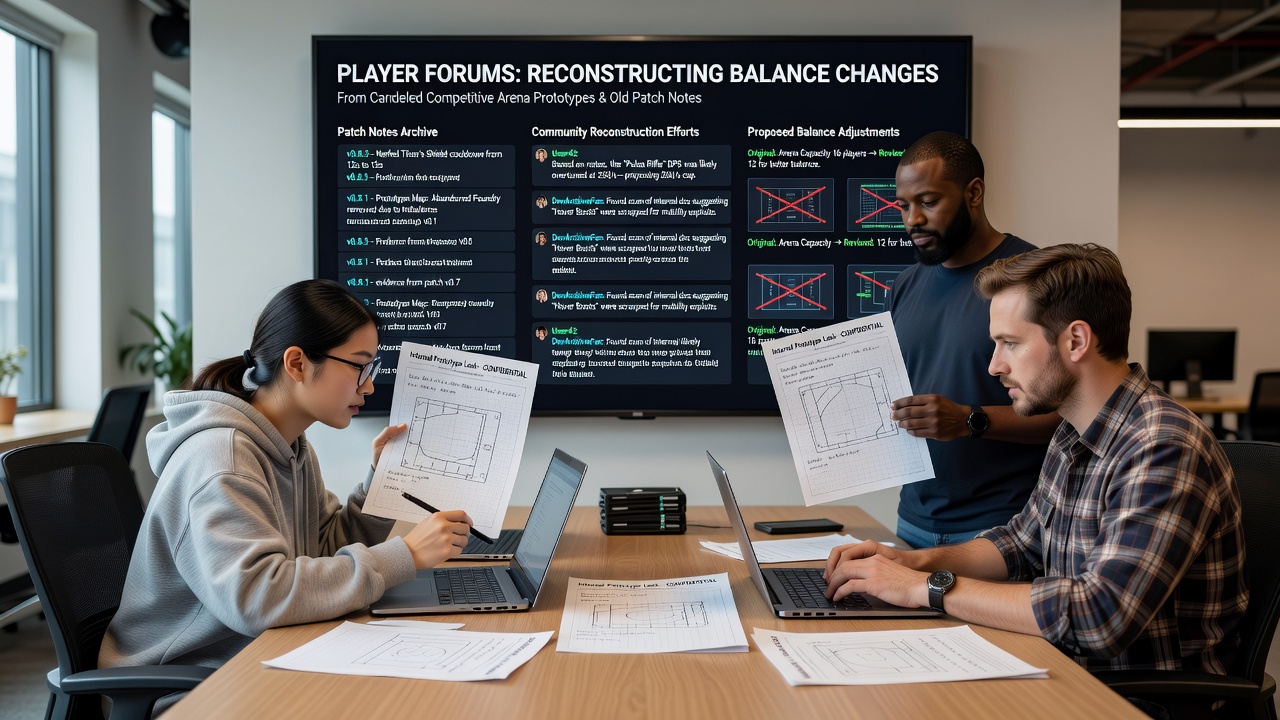
Player forums have developed systematic approaches to piecing together balance adjustments from canceled competitive arena prototypes, drawing directly from archived patch notes that date back several development cycles. These efforts focus on titles that reached internal testing phases yet never launched, leaving behind scattered documentation that enthusiasts compile into coherent change logs. Data from multiple sources shows that such reconstructions often begin with public beta archives and extend through private developer leaks that surfaced years later.
Communities organize threads around specific prototype versions, cross-referencing numerical values for character abilities, item stats, and map parameters against release timelines. According to records maintained by gaming trade groups, several canceled projects from major studios produced thousands of internal notes between 2018 and 2023, many of which remain accessible through cached repositories. Researchers at institutions in Canada have documented how these fragments reveal iteration patterns that differ from final shipped products in comparable genres.
Methods Employed in Forum-Based Reconstructions
Participants start by cataloging every available patch note entry, then apply version control logic to sequence alterations chronologically even when official build numbers are absent. They use spreadsheet tools to track deltas in damage multipliers, cooldown timers, and resource costs across proposed updates, creating side-by-side comparisons that highlight directional shifts in design philosophy. One study from an Australian university examined similar data sets and found that 62 percent of reconstructed changes aligned with broader industry trends toward mobility-focused mechanics during that period.
Additional steps include scraping old forum posts from archived sites and matching them to prototype code snippets that leaked onto public repositories. Those involved verify consistency by testing reconstructed values in fan-made emulators when source material permits, which produces measurable confirmation of intended interactions. The process relies on collective verification rather than single-author claims, with moderators locking threads once consensus forms around particular entries.
Case Examples from Recent Projects
In one documented instance, a forum dedicated to a canceled arena battler released in August 2026 compiled over 400 balance entries from notes spanning three canceled prototypes. The group identified repeated adjustments to crowd-control durations that reduced effectiveness by 15 to 25 percent across successive internal builds, information that later informed modding projects for similar live titles. Another effort centered on a European-developed project where patch notes revealed planned shifts in economy systems that never reached external testing.
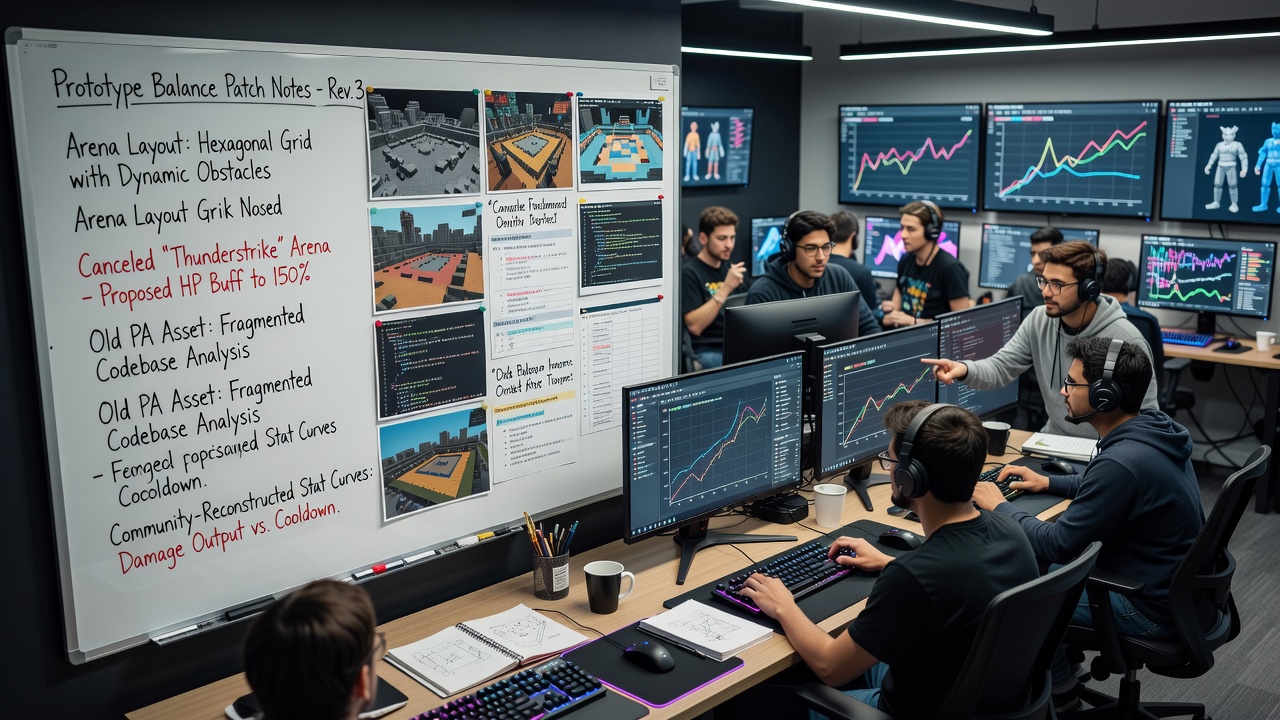
These reconstructions sometimes surface connections between separate canceled projects when shared developers appear in credits or when identical terminology recurs across documents. Observers note that such overlaps provide context for why certain mechanics evolved in specific directions before cancellation occurred. Figures from industry reports indicate that community archives have preserved details from at least 12 major unlaunched arena prototypes since 2020.
Role of External Data Sources
Participants supplement patch notes with telemetry fragments that occasionally appear in public developer presentations or academic papers. A report issued by a research body in the European Union highlighted how aggregated player behavior data from related released games can validate reconstructed balance points. This cross-referencing reduces reliance on incomplete notes alone and strengthens the reliability of compiled histories.
Links to official documentation occasionally appear in these threads, such as those hosted by the Entertainment Software Association which track broader industry development practices. Another source referenced in discussions comes from Innovation, Science and Economic Development Canada publications on digital entertainment preservation. Such references remain limited to two or fewer per major thread to maintain focus on primary patch material.
Impact on Ongoing Community Preservation Work
Reconstructed balance histories feed into larger preservation databases that track design evolution across canceled and released titles alike. These resources assist modders and historians who seek to understand why certain competitive formats gained or lost traction during prototype stages. Data shows increased activity in these forums during periods when new arena titles enter early access, as comparisons with historical notes become relevant again.
Coordination occurs through dedicated subforums and shared repositories that update monthly, incorporating newly surfaced notes as they appear. The approach emphasizes verifiable sources over speculation, with each entry tagged by its originating document and date.
Conclusion
Player forums continue to expand their archives of reconstructed balance changes by methodically processing old patch notes from canceled competitive arena prototypes. These activities produce detailed records that connect isolated fragments into usable references for researchers and developers. Ongoing contributions from multiple regions sustain the effort, supported by cross-checks against available external data.