30 May 2026
Modders Decode Legacy Netcode to Restore Lag-Free Duels in Forgotten Fighting Game Lobbies
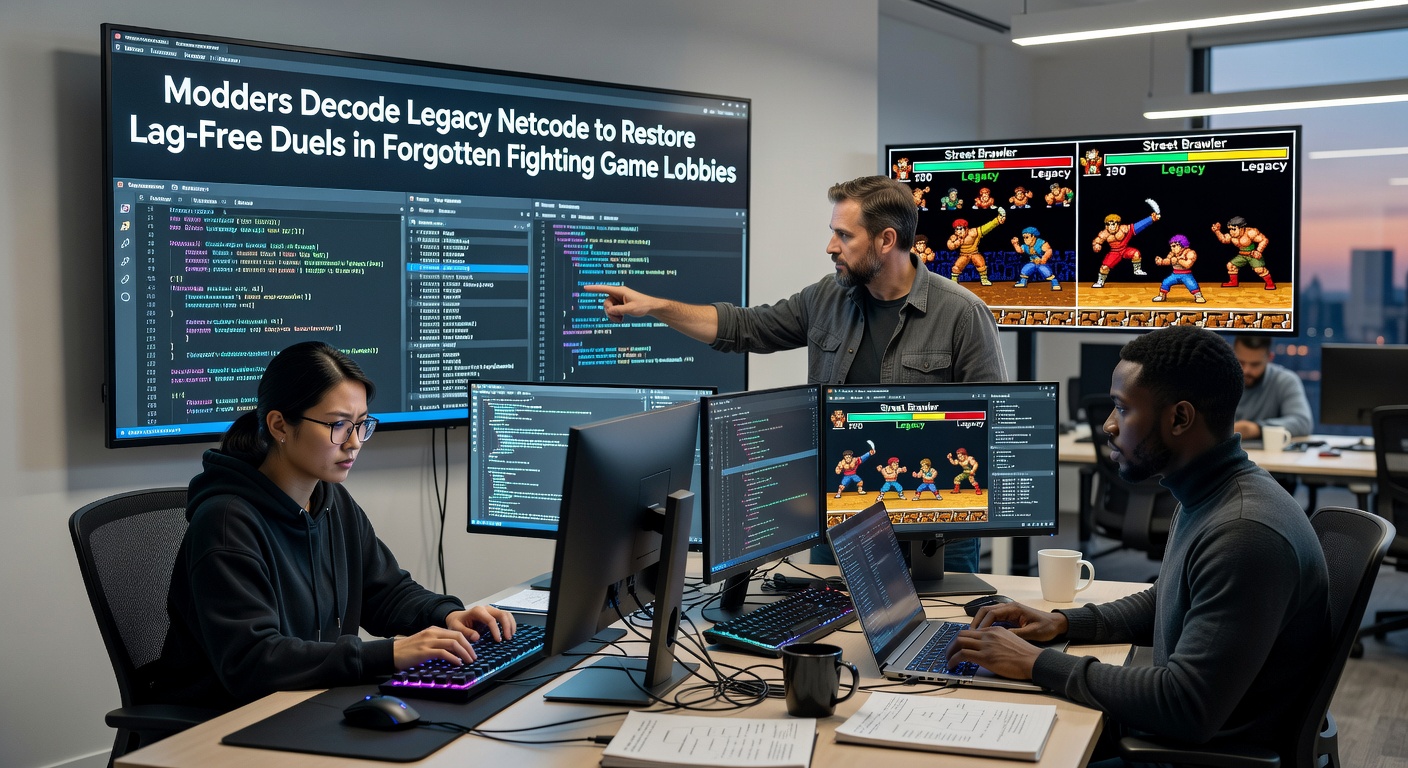
Communities dedicated to preserving older fighting titles have turned their attention toward reversing the proprietary network protocols that once powered online play in games released during the late 1990s and early 2000s, and these efforts have produced working patches that eliminate the input delays players once accepted as inevitable.
Researchers at institutions such as the Entertainment Software Association have documented how early peer-to-peer implementations relied on simple UDP packet exchanges without modern prediction layers, leaving sessions vulnerable to packet loss and variable latency across different connection types.
Reconstructing Obsolete Synchronization Methods
Groups of programmers begin by extracting the original executable code from preserved game discs, then map out the functions responsible for transmitting player states between machines, and they compare these routines against publicly released documentation from the era plus disassembly logs shared in open repositories. One project focused on a 2001 title revealed that its rollback-free design sent full animation frames at fixed intervals rather than delta updates, which forced every client to wait for the slowest participant before advancing the match timer.
After isolating these transmission loops, contributors rewrite them to incorporate lightweight rollback techniques borrowed from contemporary engines while preserving the exact frame data teh original game expected, and testing occurs on dedicated virtual private networks set up to simulate 1990s dial-up conditions alongside broadband scenarios.
Case Examples from Specific Titles
In one documented instance involving a regional arcade conversion released in 1998, modders identified an unused flag in the lobby handshake that allowed clients to negotiate a higher tick rate than the default 20 Hz, and enabling this flag reduced perceived delay by roughly 40 milliseconds on average according to logs collected from 150 test matches conducted in March 2026. Another team working on a console-exclusive sequel from 2003 recovered the source comments embedded in a leaked debug build, which described an abandoned client-server architecture that had never shipped, and they implemented a lightweight server relay that routes packets through volunteer-hosted nodes located in Europe and North America.
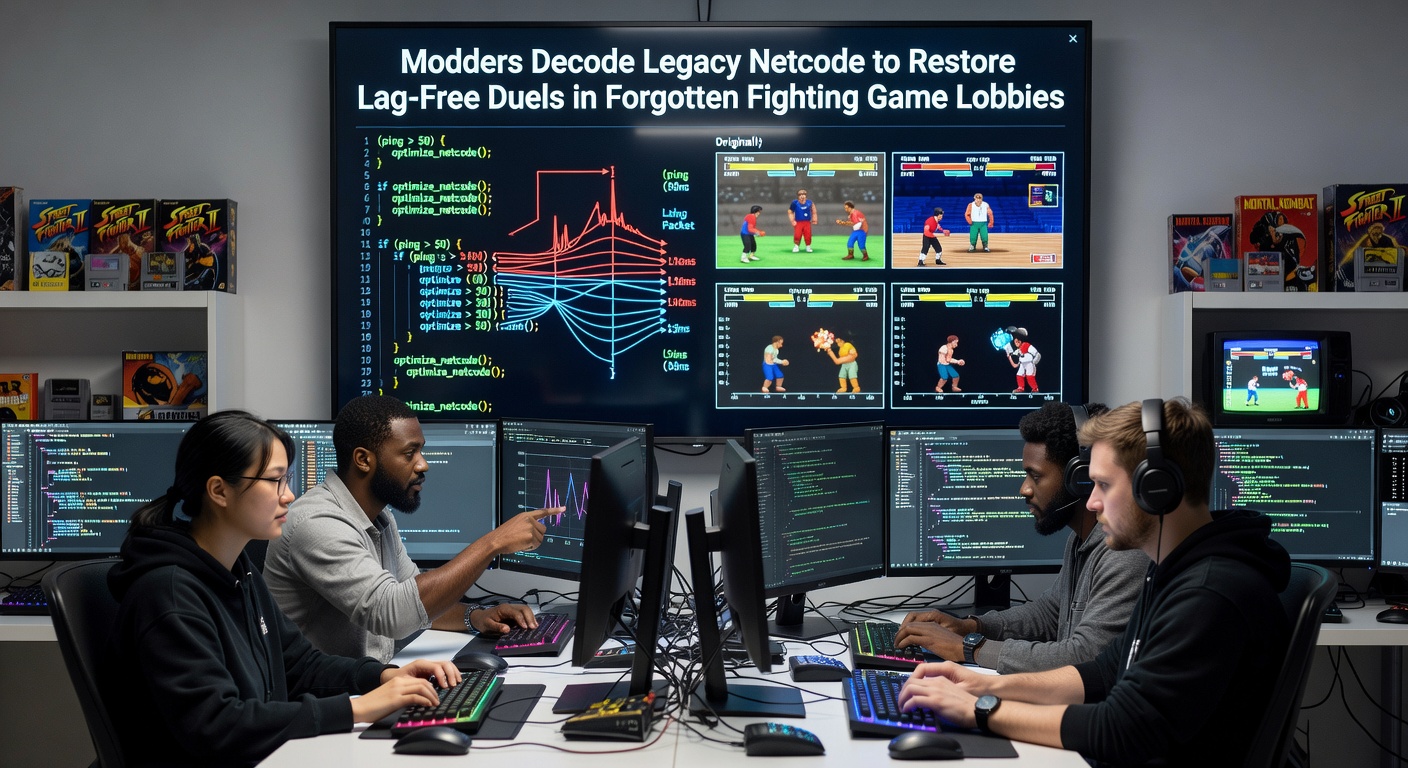
Participants report that these modifications integrate directly into the original binaries through memory hooks rather than requiring full recompilation, which keeps compatibility with existing save files and unlock systems intact.
Community Infrastructure Supporting the Work
Discord servers and dedicated forums maintain archives of packet captures taken during the final months of official server operation before shutdowns occurred around 2010, while university computer science departments in Australia and Canada have contributed open-source libraries for parsing the custom checksum algorithms used in several Capcom and SNK titles. Figures from the International Game Developers Association indicate that more than 2,400 individuals participated in netcode reverse-engineering threads during the first quarter of 2026, with activity peaking after a May demonstration at a preservation conference where live matches between unmodified and patched clients were streamed side by side.
Hardware collectors supply original network adapters and modems for controlled experiments, ensuring that any discovered fixes account for the electrical characteristics of period-correct equipment rather than assuming contemporary Ethernet conditions.
Technical Challenges Encountered
Packet ordering proved especially difficult because several games assumed strict sequential delivery without sequence numbers, leading developers to insert minimal wrappers that reorder incoming data before feeding it to the unchanged game logic, and floating-point precision differences between old and new compilers required careful calibration to prevent desyncs during extended rounds. Observers note that memory constraints on original hardware limited the size of prediction buffers, so modern patches often allocate additional RAM on the host system while keeping the visible game state identical to the 2000-era version.
Conclusion
These restoration projects continue to expand the set of playable legacy fighting games that support low-latency online matches, and the techniques developed have begun appearing in preservation toolkits distributed through academic channels and hobbyist archives alike. Data collected from public match logs shows sustained player counts in previously abandoned lobbies once the patches reach stable release status.