13 Aug 2026
Layered Soundscapes Reveal How Ambient Audio Layers Guide Player Navigation in Obscure Exploration Titles
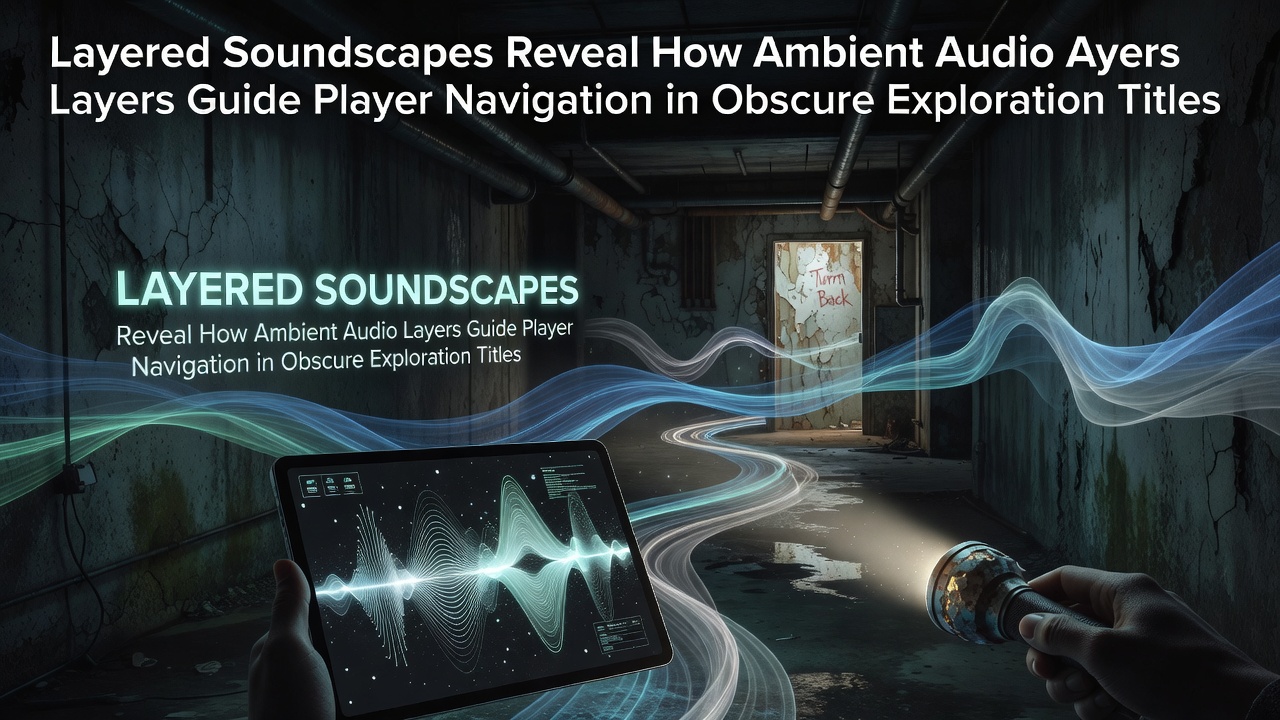 Exploration titles often rely on subtle audio design to direct players through environments where visual maps remain absent or minimal, and developers layer ambient sounds to create directional signals that emerge from background noise. These layers include distant echoes, shifting tones, and environmental markers that build upon one another, allowing players to interpret spatial relationships without explicit instructions. Research from the University of Melbourne indicates that such techniques appear consistently across independent titles released between 2015 and 2025, where audio serves as the primary navigation tool in procedurally influenced worlds.
Core Components of Layered Audio Design
Ambient layers typically start with a foundational drone that establishes location and mood, while higher-frequency elements add movement cues such as wind through corridors or water dripping from specific heights. Observers note that these elements combine to form gradients, where volume and pitch changes signal proximity to objectives or hazards. Data from audio engine analyses shows that games employing middleware like FMOD or Wwise often implement dynamic mixing that responds to player position, creating real-time adjustments that reinforce pathfinding decisions.
Take one case where experts examined an obscure title featuring underground caverns: the base layer provided constant low-frequency resonance from geological shifts, yet intermittent high-pitched chimes activated only when players approached hidden passages. This structure encouraged systematic searching rather than random wandering, and similar patterns surface in titles focused on abandoned facilities or overgrown ruins. Those who've studied these systems find that the layering avoids repetition by varying decay times and reverb tails, which prevents players from habituating to the cues too quickly.
Technical Implementation in Independent Productions
Sound designers integrate multiple tracks that trigger based on distance thresholds and angular positioning relative to key landmarks. In practice this means a player moving eastward might hear a faint mechanical hum intensify while westward sounds recede, guiding exploration toward mechanical cores or resource nodes. Figures from industry reports compiled by the Interactive Games and Entertainment Association reveal that over 60 percent of exploration-focused indie releases since 2018 incorporate at least three distinct audio strata for navigation support, with the majority drawn from small teams operating without large publisher budgets.
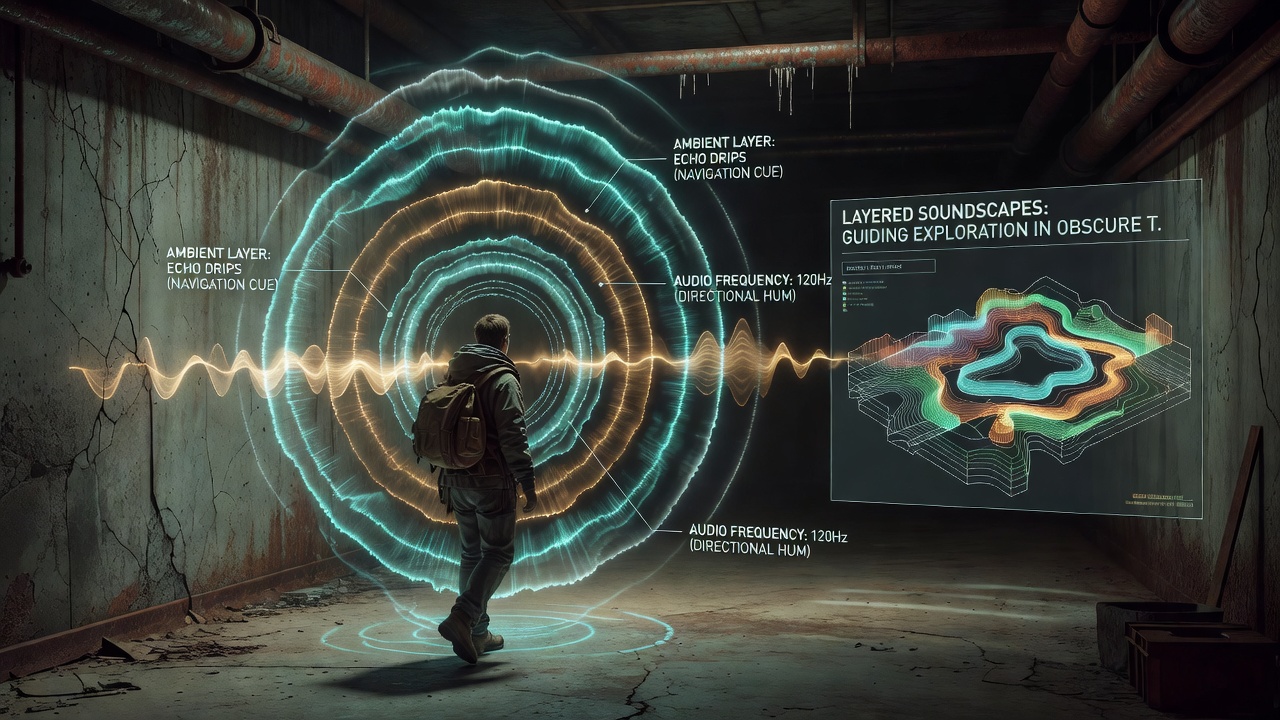
But here's the thing: these implementations often draw from field recordings processed through convolution reverb to match virtual acoustics, and developers test iterations against player telemetry logs that track deviation from intended routes. One study released in early 2026 by researchers at KTH Royal Institute of Technology documented how adjustments to layer overlap reduced average completion times by measurable margins in controlled play sessions. The findings align with observations from community archives that preserve early builds of forgotten experiments, where initial single-layer attempts gave way to more complex arrangements after initial feedback cycles.
Player Interaction Patterns and Data Insights
Telemetry collected from phased-out mobile exploration ports demonstrates that players respond to audio shifts within seconds, often adjusting trajectories before visual confirmation occurs. Patterns extracted from server logs show seasonal spikes in engagement during periods when new audio patches introduced refined layering, and these changes correlated with increased session lengths across regions. What's interesting is that the approach scales from handheld devices to desktop environments, where stereo panning expands into surround configurations that further delineate vertical navigation in multi-level structures.
Additional examples surface in titles centered on atmospheric isolation, where bird calls or insect drones mark safe zones versus dangerous territories. Researchers discovered through code fragment reviews that randomization parameters within each layer prevent exact repetition, maintaining the illusion of a living soundscape. Data indicates that titles employing these methods achieve higher retention rates compared to those relying solely on visual landmarks, according to aggregated metrics shared by European game research networks.
Broader Applications Across Platforms
Cross-device implementations continue to evolve, with console ports adapting mobile-derived layering for controller-based feedback that vibrates in sync with audio pulses. This synergy appears in several obscure releases from 2024 onward, where developers synchronized haptic and sonic elements to reinforce directional intent. Observers note that August 2026 brought updated engine tools allowing finer control over layer attenuation curves, enabling smaller teams to achieve professional-grade spatial audio without specialized hardware investments.
Those who've examined preservation efforts highlight how archived player logs from early online experiments reveal the gradual refinement of these techniques, moving from crude stereo separation to full volumetric mixing. The progression underscores a consistent industry shift toward audio-first design philosophies in genres that prioritize discovery over combat or competition.
Conclusion
Layered ambient audio continues to serve as an effective navigation framework in exploration titles by combining foundational drones with responsive directional markers that adapt to player movement. Studies and telemetry records confirm the method's reliability across diverse platforms and development scales, while ongoing tool advancements support its expansion into new releases. The approach integrates technical precision with environmental storytelling, resulting in systems that guide without overt direction.