16 May 2026
Grassroots Meetups Decoding Vintage Console Firmware to Unlock Hidden Features
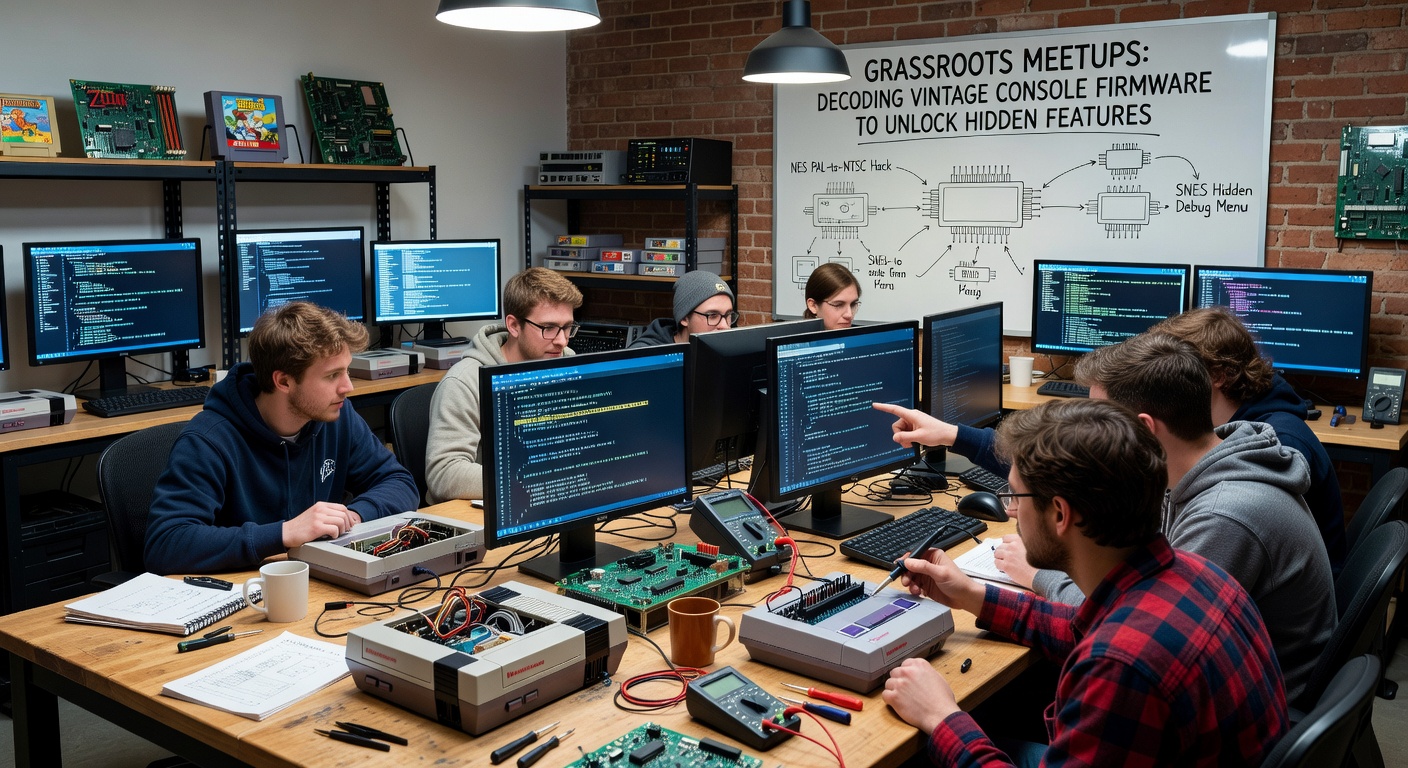
Communities around the world have formed regular gatherings where participants examine firmware from systems released decades ago, extracting data that reveals unused code, debug tools, and region-specific locks originally built into hardware like the Nintendo Entertainment System, Sega Genesis, and PlayStation consoles. These sessions rely on shared equipment such as ROM readers, logic analyzers, and custom software scripts that allow users to dump and inspect binary files directly from cartridge or disc media without modifying the original devices.
Origins and Growth of Firmware Analysis Groups
Meetups focused on this work began gaining traction in the early 2010s as preservation projects documented how manufacturers embedded extra functionality that never reached consumers, and data from the Computer History Museum shows increased interest in hardware-level reverse engineering after 2015 when affordable microcontrollers made dumping tools widely available. Participants typically bring their own collections of cartridges and consoles, then work in small teams to compare firmware versions across different manufacturing batches or regional releases, identifying patterns in assembly code that point to hidden menu options or test modes.
By 2023 these informal networks had expanded through online forums that coordinate physical events in cities from Tokyo to Toronto, with attendance records from one Canadian university-hosted session indicating over 120 participants in a single weekend. Techniques taught at these events include using bus sniffers to capture memory access during boot sequences and applying static analysis tools to map out function calls that remain inactive under normal operation.
Technical Methods Employed at Gatherings
Attendees start sessions by connecting consoles to custom interfaces that allow controlled execution of firmware while logging every instruction processed by the CPU, and this approach has uncovered features such as developer debug overlays in multiple 16-bit titles. Groups often divide tasks so that one subgroup handles cartridge pinout verification while another focuses on checksum calculations to verify data integrity after extraction, ensuring that any discovered hidden elements can be reproduced reliably on unmodified hardware.
Researchers affiliated with York University in Canada have published findings on similar disassembly processes applied to 1990s hardware, demonstrating how specific opcode sequences correspond to unused audio channels or alternate graphics layers. Participants incorporate these academic methods into practical workshops where newcomers learn to patch firmware images in memory without altering physical media, allowing immediate testing of unlocked options during the meetup itself.
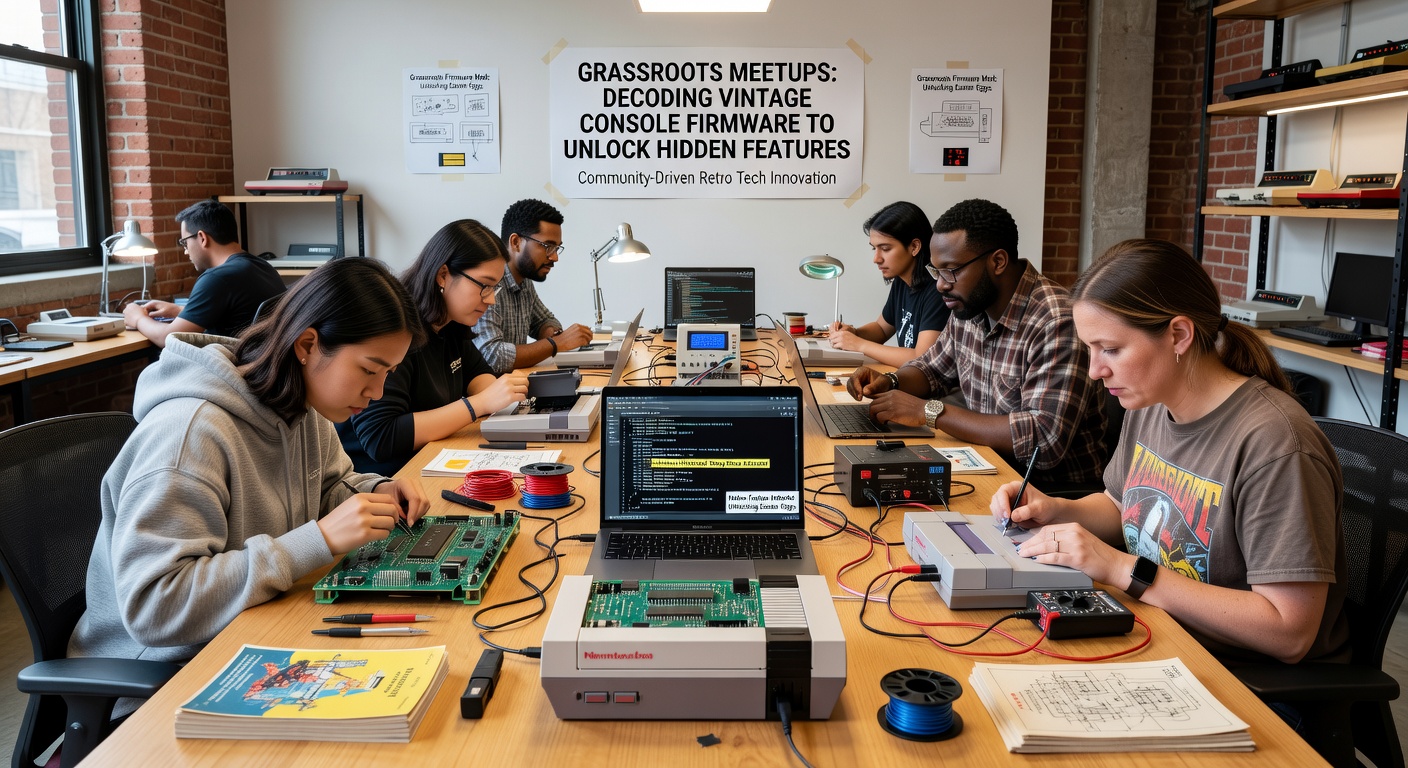
Events scheduled for May 2026 include multi-day workshops in Melbourne organized in partnership with the Australian Centre for the Moving Image, where sessions will focus on 32-bit era firmware from systems that introduced optical media security measures. These gatherings emphasize documentation practices so that extracted data contributes to public archives rather than remaining isolated within small circles.
Documented Discoveries and Their Applications
One recurring outcome from these meetups involves the recovery of region-free bootloaders that manufacturers disabled before retail distribution, enabling consoles to run software from any market without additional hardware modifications. Data compiled by the International Game Developers Association indicates that at least 47 distinct debug menus have been documented across first- and second-generation PlayStation models since community analysis efforts intensified in 2018.
Examples include the activation of built-in memory viewers in certain Game Boy Advance titles and the restoration of cut soundtrack tracks stored in unused ROM banks on Mega Drive cartridges, both achieved through targeted byte-level edits identified during group sessions. Such findings circulate through shared repositories that maintain version histories and compatibility notes, allowing later participants to replicate results on their own equipment.
Legal and Preservation Considerations
While firmware analysis for personal use remains legal in many jurisdictions when no copyrighted material is redistributed, groups maintain clear guidelines that prohibit commercial exploitation of discovered features. Preservation-focused organizations stress that these activities support long-term access to historical software artifacts, particularly as original hardware ages and replacement parts become scarce.
Participants track regulatory developments across regions to ensure compliance, noting that Australian copyright exceptions for interoperability research provide broader latitude than some North American frameworks. Events continue to attract contributors from academic, hobbyist, and archival backgrounds who prioritize open sharing of methods and results.
Conclusion
Grassroots firmware meetups have established consistent practices for examining vintage console software, producing verifiable technical data that expands understanding of hardware design decisions from earlier eras. As events planned through 2026 demonstrate continued momentum, the work remains centered on methodical extraction, documentation, and testing procedures that preserve functional elements otherwise inaccessible on stock systems.