13 Jul 2026
Firmware Dissection Initiatives Map Input Latency Differences Across Replica Arcade Systems Worldwide
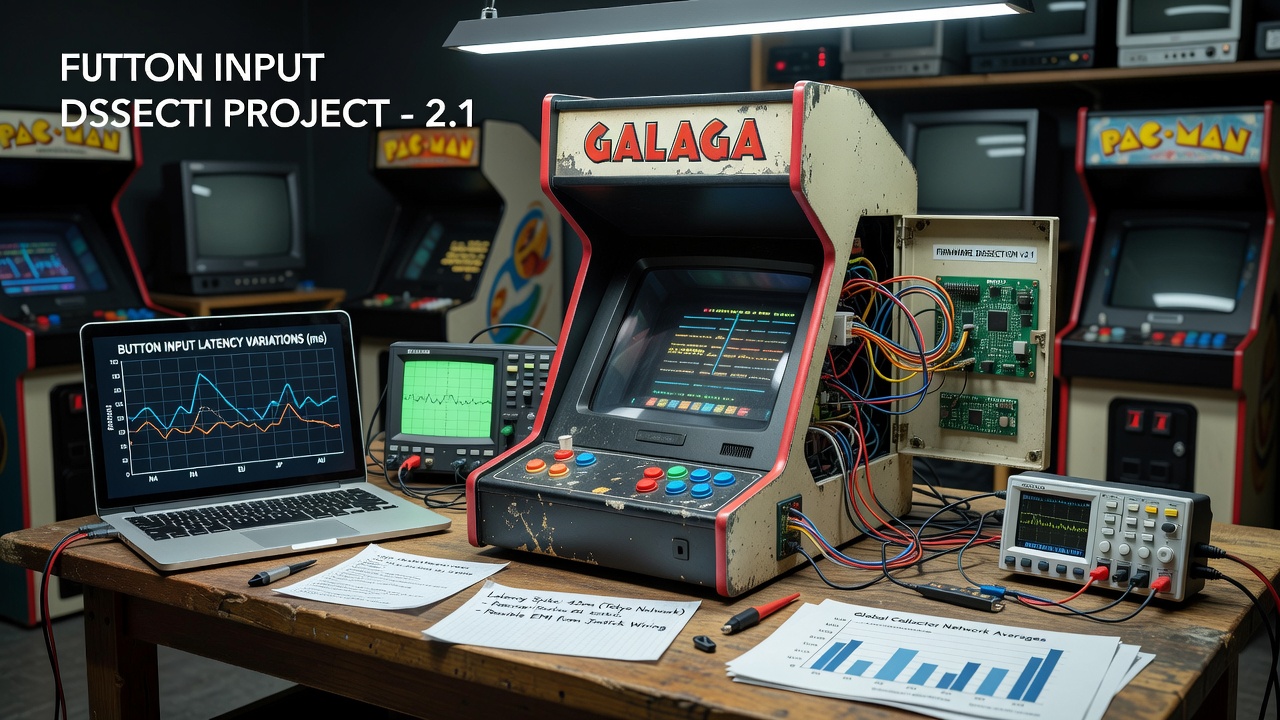
Collector networks have expanded rapidly since the early 2010s, and firmware dissection projects now focus on button input latency as a measurable variable in replica arcade cabinets. These efforts rely on systematic code extraction, timing benchmarks, and shared databases that span North America, Europe, and Asia. Researchers extract microcontroller instructions from original and replica boards, then compare response intervals under controlled electrical loads. Data sets accumulate through coordinated submissions from hobbyist labs and university engineering departments.
Core Techniques in Firmware Extraction
Teams begin by isolating the primary microcontroller and reading its flash memory through JTAG or serial interfaces. Once the binary image is obtained, analysts map button scan routines to hardware timers, then instrument those routines with external logic analyzers. Measurements record the interval between physical switch closure and the corresponding interrupt flag in firmware. Variations appear when replica boards substitute different clock crystals or employ modified debounce algorithms. Projects log these intervals in microseconds, then normalize results against reference voltages and temperature ranges.
One study released by a Canadian engineering consortium in 2024 documented average latencies ranging from 4.2 ms to 11.7 ms across fifty replica units. The same dataset revealed that boards using cloned Atmel chips consistently produced longer debounce windows than those retaining original Motorola parts. Collectors upload raw timing traces to a central repository, which applies statistical filters to remove measurement noise before publishing aggregated reports.
Global Collector Networks and Data Sharing
Regional groups coordinate through encrypted mailing lists and version-controlled repositories. European archivists in Germany and the Netherlands contribute disassembly notes focused on Konami and Capcom titles, while Australian contributors emphasize Taito and Sega hardware variants. North American participants often supply high-speed oscilloscope captures that capture edge cases during rapid successive inputs. These exchanges produce unified latency tables that list each cabinet model alongside its measured minimum, maximum, and median response times.
Repositories now contain entries for more than three hundred distinct replica configurations. Metadata fields include firmware revision, crystal frequency, debounce loop count, and power supply ripple measurements. Cross-referencing allows observers to identify clusters where particular component substitutions correlate with elevated latency. In July 2026 the International Arcade Preservation Alliance plans to release an updated dashboard that visualizes these clusters on an interactive map.
Observed Latency Patterns and Contributing Factors
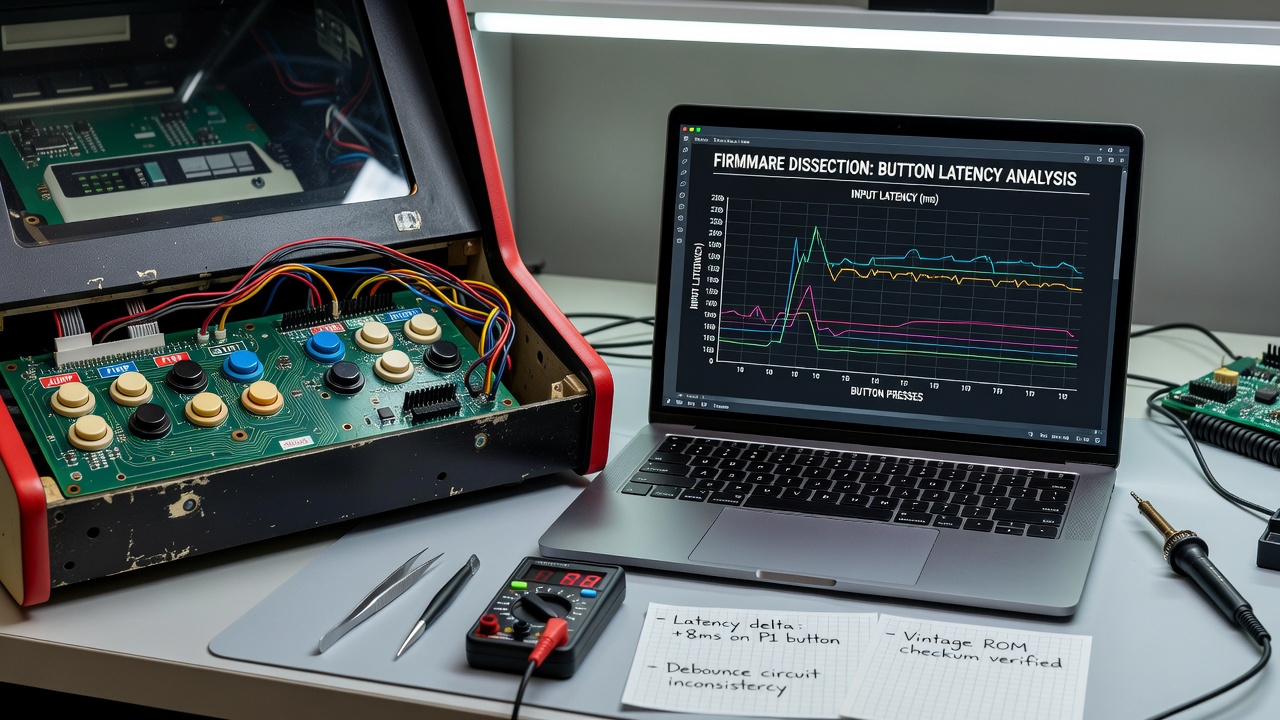
Dissection results show that replica cabinets built between 2018 and 2022 frequently incorporate surface-mount microcontrollers with faster instruction cycles than the originals they emulate. Shorter instruction cycles can reduce theoretical latency, yet many implementations retain software debounce routines calibrated for noisier mechanical switches. When modern tactile buttons replace leaf switches, the firmware still executes the original debounce loop, producing unnecessary delay. Analysts note that substituting a single assembly instruction or adjusting timer prescalers can cut measured latency by several milliseconds without altering gameplay feel.
Power supply quality also influences results. Boards fed from switching regulators exhibit higher variance in interrupt timing compared with linear supplies. Temperature tests conducted at 25 °C and 40 °C demonstrate that crystal drift adds up to 0.8 ms of additional latency at the upper end of the range. Projects therefore record environmental conditions alongside each timing trace.
Documentation Standards and Verification Protocols
Contributors follow a published checklist that requires at least three repeated measurements per button, captured at 1 MHz sampling rate. Each submission includes photographs of the board, a hex dump of the relevant firmware section, and a CSV file of raw timestamps. Peer reviewers on the network flag entries that deviate more than two standard deviations from the model average, prompting re-measurement. This process has reduced erroneous data points to less than four percent of the total archive.
Academic partners at the University of Tokyo have developed an automated script that parses submitted traces and flags potential firmware modifications. The script compares opcode sequences against known original binaries and highlights any inserted delay loops or altered interrupt priorities. When discrepancies appear, the originating collector receives a request for additional context before the entry is accepted.
Conclusion
Firmware dissection projects continue to accumulate precise measurements of button input latency across replica arcade cabinets. Coordinated collector networks supply the raw data, while standardized verification protocols maintain consistency. The resulting repositories allow researchers to trace how component substitutions and software choices affect response times, providing a factual basis for future replication efforts and preservation work.