23 May 2026
Community Shader Patches Advance Texture Mapping in Legacy 3D Adventure Titles
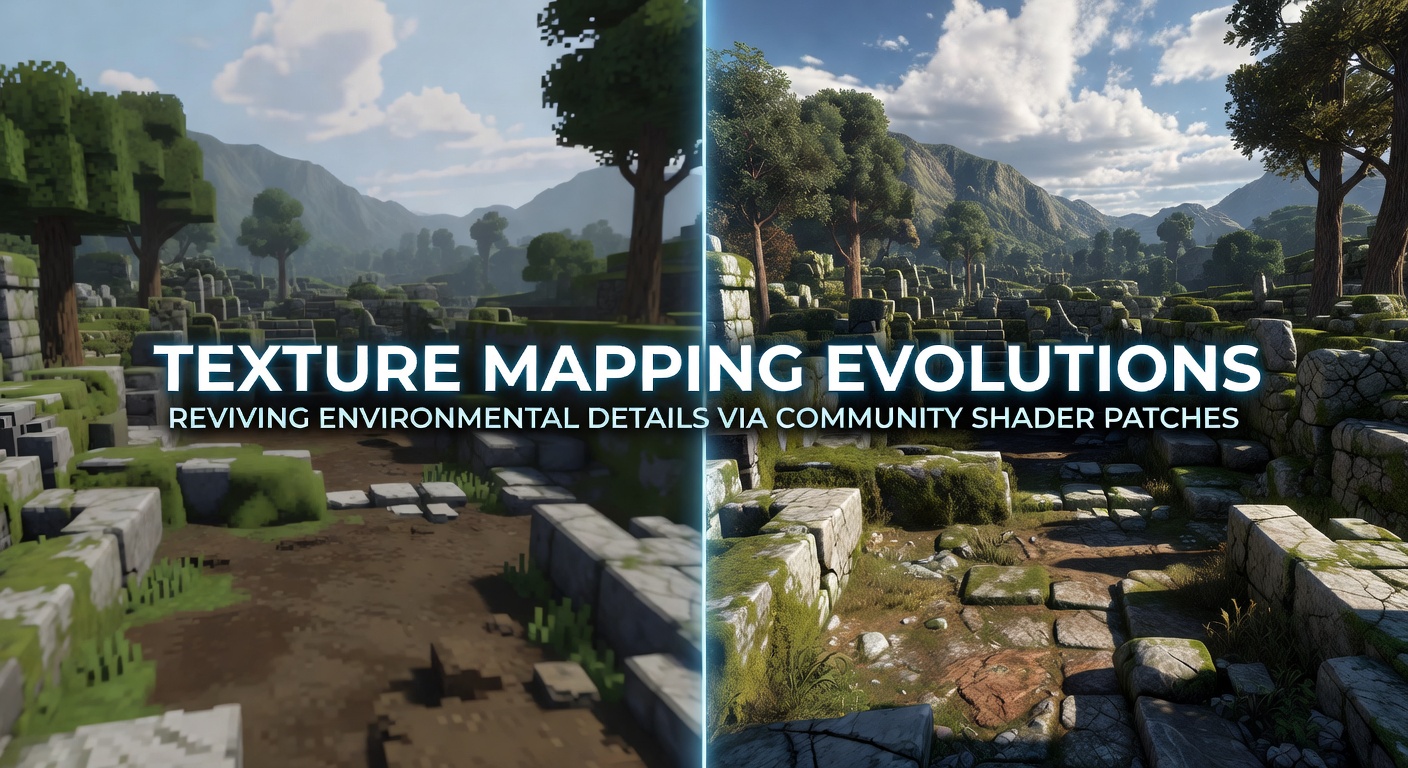 Texture mapping techniques have progressed through multiple technical stages since the 1990s, and community-driven shader patches now apply contemporary methods to older 3D adventure environments that originally relied on basic bilinear filtering and low-resolution assets. These patches integrate anisotropic filtering, normal mapping, and parallax occlusion techniques directly into game engines without altering core code bases. Data from modding repositories indicate steady growth in adoption rates through early 2026. Developers first introduced texture mapping in commercial titles around 1993 with games such as Doom, where 2D images projected onto polygons created surface variation at minimal computational cost. By the late 1990s, titles including Myst sequels and early Tomb Raider entries expanded this approach with mipmapping to reduce aliasing at distance. Hardware limitations of the era capped texture resolutions at 256 by 256 pixels in many cases, which produced visible stretching when players approached surfaces closely.
Technical Foundations of Modern Community Patches
Community shader patches build on programmable pipeline capabilities introduced with DirectX 9 and OpenGL 2.0, allowing post-processing layers that reinterpret original texture data. Reshade and ENB frameworks serve as common platforms where users load custom HLSL or GLSL code to implement these enhancements. According to documentation from the International Game Developers Association, such tools enable real-time calculation of tangent-space normal maps derived from diffuse textures, restoring geometric impression without new art assets.
Patches frequently combine multiple passes, beginning with edge detection to preserve original silhouette integrity while sharpening interior details. Anisotropic sampling then replaces trilinear filtering across slanted surfaces, which data from performance benchmarks show reduces blur by measurable margins at oblique viewing angles. Parallax occlusion adds depth simulation by offsetting texture coordinates based on height information extracted or approximated from existing maps.Application Examples in Specific Adventure Environments
One documented case involves the 2002 title The Longest Journey, where a 2025 community release applied normal and specular mapping layers that clarified wooden decking and stone textures without changing polygon counts. Players reported clearer navigation cues in dimly lit corridors once the shader stack processed incoming light vectors through updated Phong calculations. Another instance centers on Grim Fandango Remastered assets prior to official updates, where independent contributors released configuration files that revived fabric and metal surfaces through procedural detail generation.
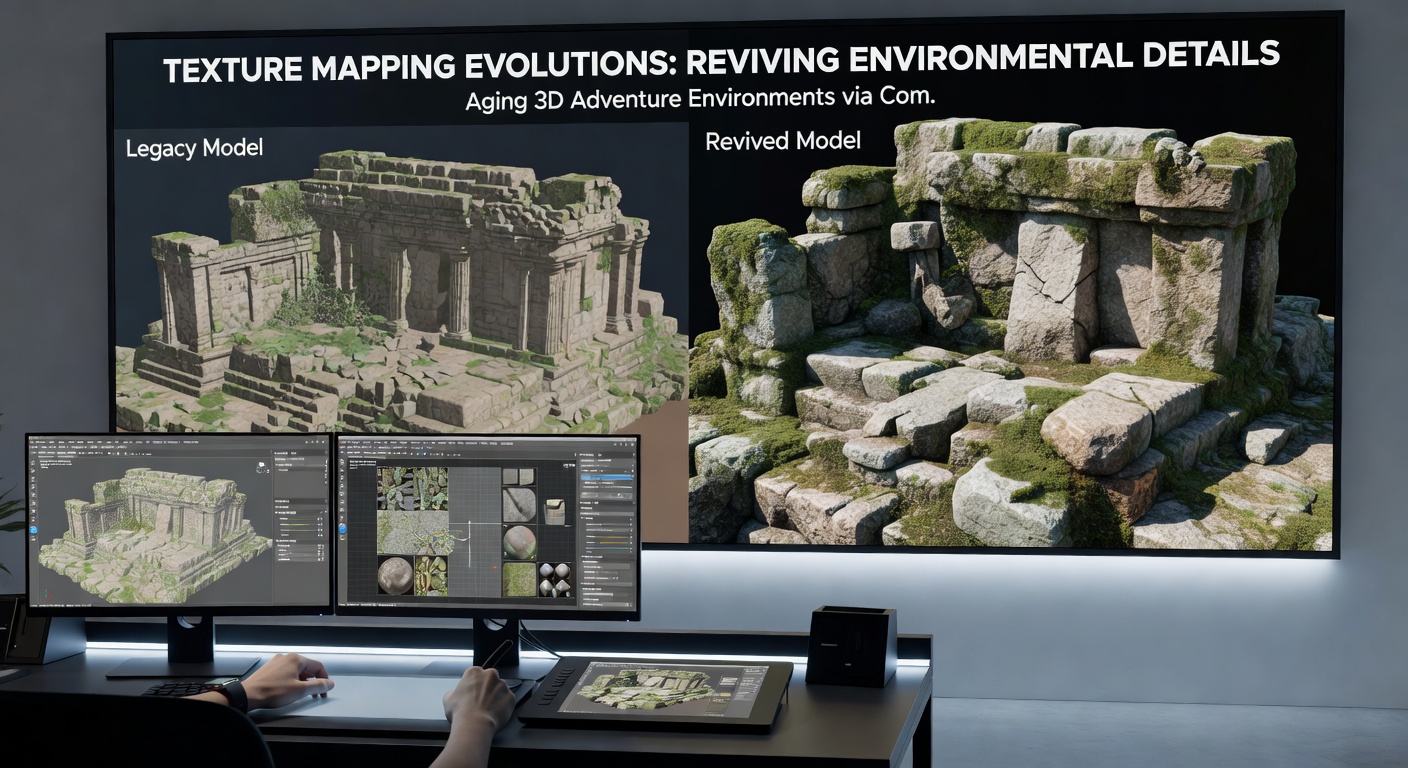 By May 2026, several repositories tracked over 120 active shader configurations targeting pre-2010 adventure releases. These configurations often include toggle options that allow users to match performance profiles across different GPU generations. European research compiled by the Interactive Software Federation of Europe notes that shader-based texture upgrades typically require under 15 percent additional VRAM compared with native high-resolution texture replacements.
Integration Challenges and Compatibility Approaches
Engine-specific quirks present recurring obstacles, since many older titles use fixed-function pipelines that bypass modern shader stages. Community solutions frequently intercept draw calls through API wrappers such as DXVK or dgVoodoo2, routing legacy calls through updated rendering paths. Observers note that successful patches require careful calibration of gamma correction curves to avoid washing out original artistic intent while still delivering sharper surface definition.
Multiplayer or save-file compatibility remains intact in most implementations because patches operate entirely at the rendering layer. Testing logs shared across forums show that frame-time variance stays within acceptable thresholds when anisotropic levels are capped at 8x or 16x on mid-range hardware from 2024 onward. Australian academic studies on real-time graphics from the University of Melbourne have examined similar interception techniques and confirmed their stability across multiple DirectX versions.Broader Patterns in Preservation Efforts
Texture mapping evolution through community patches forms part of wider digital preservation activity that also encompasses source port development and asset extraction tools. Figures from mod distribution platforms reveal that adventure genre titles account for approximately 18 percent of shader-related downloads in the first quarter of 2026. These numbers reflect coordinated efforts among dispersed contributor groups rather than centralized studio initiatives.
Compatibility layers continue to evolve alongside GPU driver updates, with patch maintainers releasing incremental revisions that address new vendor-specific extensions. The process connects original low-fidelity data with contemporary rendering mathematics, allowing environmental details to re-emerge under varied lighting conditions that original developers could not have targeted.Conclusion
Community shader patches represent a sustained technical bridge between early 3D adventure environments and current rendering standards, focusing on texture mapping refinements that operate without source modifications. Ongoing repository activity and cross-platform compatibility work indicate continued refinement through at least 2026, supported by performance data and documented integration methods from multiple technical communities.