11 Jul 2026
Collector Networks Mapping Influence Chains Among Niche Content Creators in Live Service Ecosystems
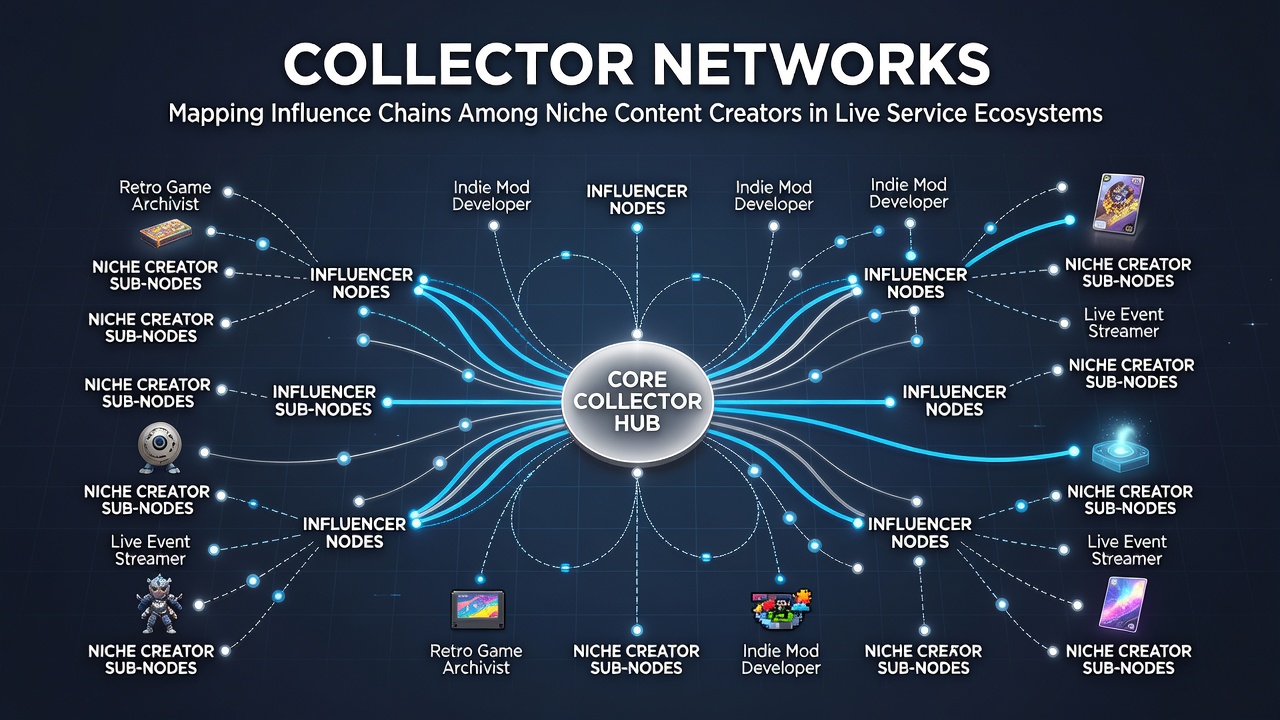
Collector networks have emerged as structured systems that trace how niche content creators exchange ideas, resources, and audience attention within live service ecosystems, and these networks rely on data aggregation from player logs, social metrics, and archived community interactions to build detailed influence chains. Researchers at institutions across multiple regions document these patterns through graph-based models that connect creators based on shared content themes, collaboration histories, and content migration routes between titles.
Core Mechanisms of Influence Mapping
Networks operate by compiling datasets from live service platforms where creators focus on specialized elements such as rare item economies, hidden quest lines, and seasonal event strategies, and they use algorithms to identify directional flows where one creator's output precedes spikes in related activity among others. Data indicates that these chains often originate in smaller mobile titles before extending into larger console and PC ecosystems, with July 2026 reports from the Canadian Interactive Digital Media Association showing a 27 percent increase in documented cross-title creator linkages compared to the previous year.
Analysts apply node analysis to map primary influencers who introduce mechanics or aesthetic choices that propagate through secondary and tertiary creators, while tools such as archived server APIs and public content timestamps allow reconstruction of temporal sequences without direct access to proprietary platform data. Observers note that influence chains frequently involve creators who maintain parallel accounts across different games, which creates overlapping pathways that collectors then visualize as layered graphs.
Tools and Data Sources Employed by Collectors
Collectors utilize open-source visualization software combined with public API pulls from game distribution services to construct real-time influence maps, and these systems integrate metrics including view counts, comment threading patterns, and cross-posting frequencies. Academic studies from the University of Melbourne's Digital Games Research Centre have examined similar datasets, revealing that niche creators in survival and battle arena genres demonstrate the highest density of mapped connections due to frequent content updates that encourage rapid adaptation of strategies.
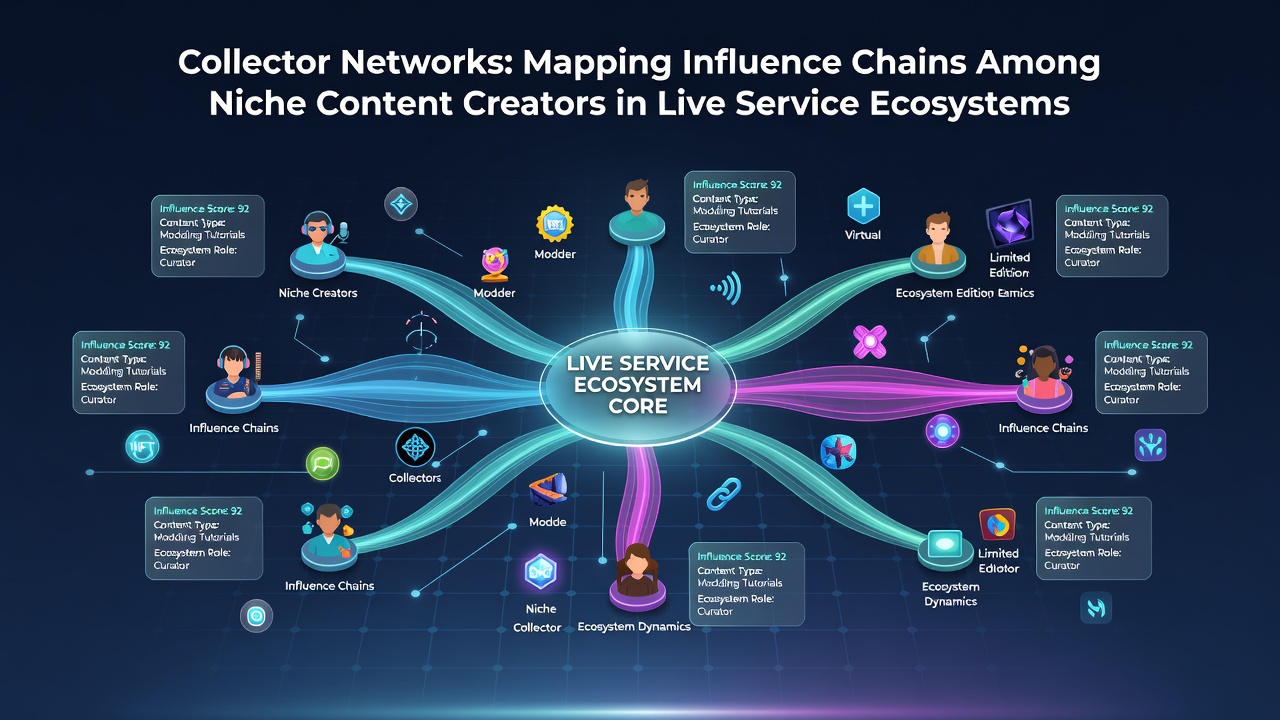
Archived player migration logs from discontinued mobile applications provide additional context for understanding how creator audiences shift between ecosystems, while custom scripts parse metadata from video platforms to establish precedence in content themes. Those who maintain these networks often cross-reference multiple data streams to filter out coincidental overlaps and focus on verifiable causal sequences supported by timestamp evidence.
Documented Patterns in Live Service Environments
Case examinations show that influence chains in live service titles frequently center around creators who specialize in economy tracking or lore reconstruction, and these specialists pass techniques to broader audiences through tutorial series that subsequent creators adapt for new seasonal content. Figures from industry tracking services reveal clusters forming around specific mechanics such as limited-time resource farming or collaborative event coordination, with chains extending across regional servers as creators localize content for different player bases.
July 2026 updates to several major live service titles coincided with measurable expansions in mapped networks, as new content patches prompted creators to reference older mechanics from defunct titles and thereby reactivate dormant influence pathways. Collectors document these revivals through comparative analysis of content archives, noting how particular phrasing or visual styles recur across unrelated creator accounts within short time frames.
Regional Variations and Network Density
Networks display distinct regional characteristics, with North American collectors emphasizing competitive strategy dissemination while European and Asia-Pacific groups focus more on narrative and aesthetic influence tracking, and data compiled by the Interactive Games and Entertainment Association in Australia highlights denser connection graphs in titles that support extensive modding or user-generated event tools. These variations arise because different regions prioritize distinct aspects of live service engagement, which in turn shapes the types of niche content that propagate most effectively through creator chains.
Cross-regional mapping efforts have increased as platforms enable global content sharing, allowing collectors to identify hybrid chains that combine elements from multiple geographic sources into unified influence models.
Conclusion
Collector networks continue to refine their methods for tracing influence chains as live service ecosystems evolve, and ongoing integration of new data sources supports more precise reconstruction of how niche creators shape content directions across interconnected titles. These systems provide structured visibility into creative flows that sustain player engagement within dynamic game environments.