22 Jun 2026
Charting Ergonomic Adaptations in Controller Layouts as Touch-Based Strategy Sessions Expand Across Portable and Living-Room Setups
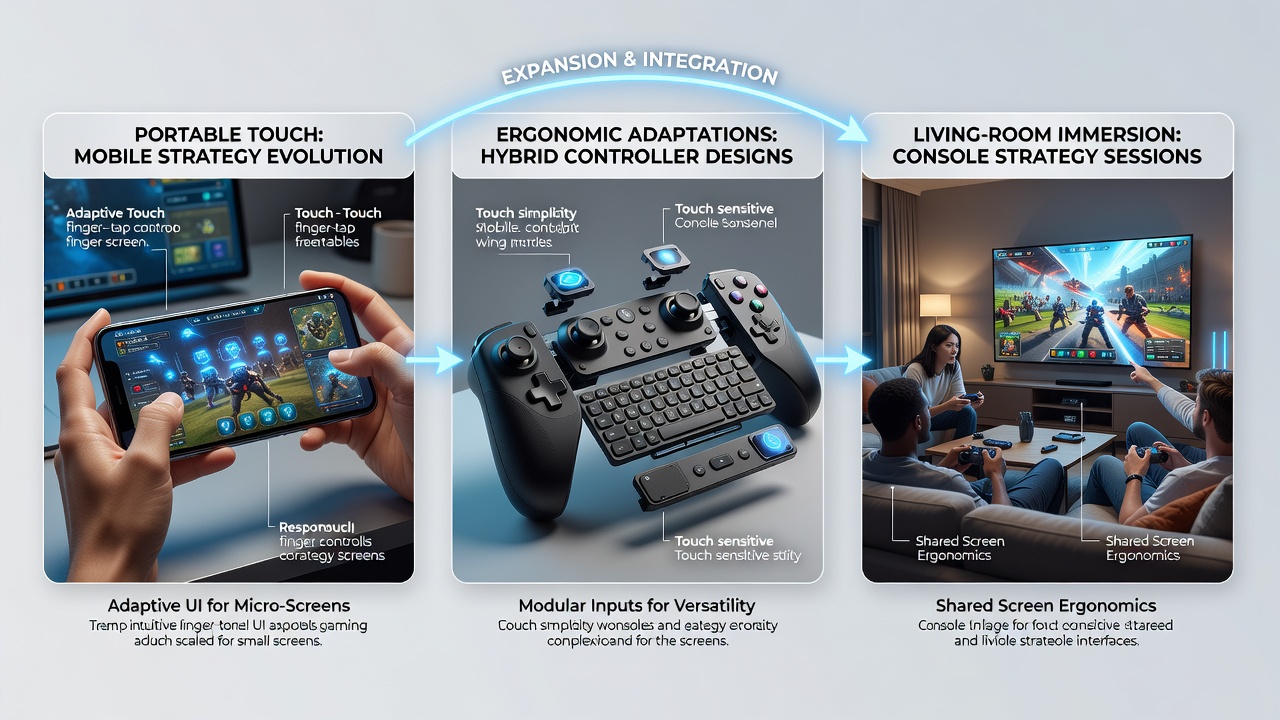
Touch-based strategy sessions have moved from handheld devices into living-room environments where players connect mobile titles to larger displays and pair them with physical controllers. This shift has prompted manufacturers to redesign button placements, grip angles, and input zones so that commands originally mapped to screen touches translate smoothly onto handheld hardware. Observers note that strategy games rely on precise unit selection and menu navigation, and those requirements drive specific changes in how controllers distribute weight and position thumbsticks relative to shoulder buttons.
Portable Origins and Initial Layout Constraints
Early portable strategy games used direct screen interaction on tablets and smartphones, and that approach limited session length because players held devices in ways that strained wrists during extended matches. Data from industry reports shows that developers began releasing companion controllers with clip-on designs by 2023, and those attachments repositioned primary action buttons along the sides to reduce thumb travel distance. Researchers at institutions such as the University of Waterloo documented how players adjusted grip pressure when switching between touch input adn physical buttons, and the findings influenced later models that incorporated contoured rests beneath the palms.
Transition to Living-Room Configurations
By June 2026, living-room setups had become common for titles that originated on portable platforms, and manufacturers responded by releasing controllers with modular faceplates that accommodate both compact and extended hand sizes. These adaptations include adjustable trigger depths that match the timing windows required for strategy commands such as formation changes or resource allocation. Observers note that the same games now stream to televisions through wireless adapters, which means players sit farther from the screen and require larger analog zones to maintain accuracy without visual reference to their hands.
Hardware developers integrated touch-sensitive surfaces on the rear of certain controllers so that gestures familiar from mobile screens could remain available even when the device rests on a lap or couch arm. This hybrid approach preserves input speed while distributing pressure across different muscle groups, and figures from trade associations indicate that units featuring rear touch panels accounted for a growing share of accessory sales in the first half of 2026.
Key Ergonomic Modifications in Current Designs
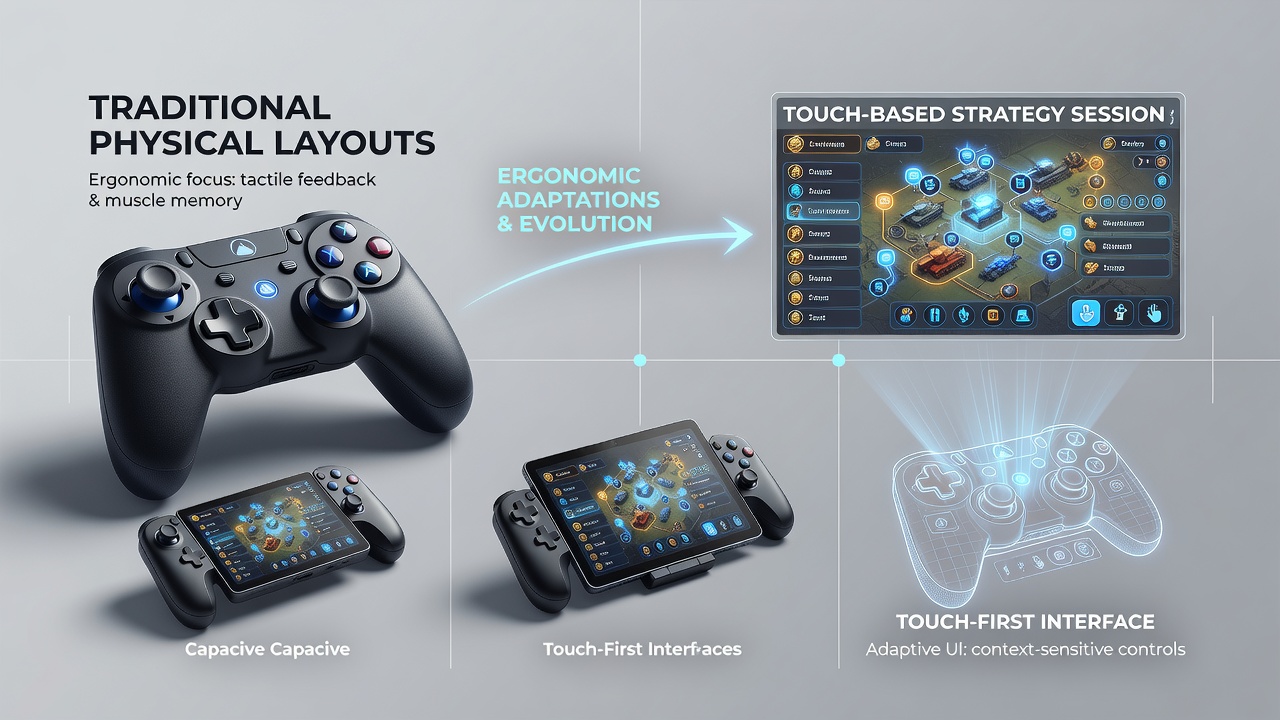
Current layouts reposition the directional pad and face buttons to align with natural thumb arcs observed during laboratory testing of strategy multitasking. Shoulder buttons receive textured surfaces that help players distinguish between multiple command layers without looking down, and this feature proves useful when games require rapid toggling between unit groups and camera controls. Weight distribution has also shifted, with battery packs moved toward the center of the controller body to reduce torque on teh wrists during prolonged sessions that last beyond two hours.
Studies conducted by European research consortia found that players using controllers with symmetrical grip angles reported fewer instances of thumb fatigue compared with earlier asymmetrical designs. Those results prompted several brands to offer interchangeable palm rests that users can swap based on hand size or preferred posture. In addition, software profiles allow button sensitivity curves to be tuned per game, which aligns physical input ranges with the variable precision demands of different strategy mechanics.
Cross-Device Consistency and Player Data
Analytics platforms that track controller usage across portable and stationary modes reveal consistent patterns in how players remap secondary commands to under-button paddles. These patterns show up most clearly in titles that support both touch and physical input, where players migrate frequently between devices during a single day. Industry organizations such as the Entertainment Software Association have published summaries indicating that controller firmware updates in 2025 and 2026 focused on latency reduction for touch-to-button translation layers, and those updates coincided with measurable decreases in input errors during competitive play.
Manufacturers continue to test layouts that incorporate slight outward angles on analog sticks, a change that accommodates the wider hand positions common when players rest controllers on their laps in living-room settings. Such adjustments build directly on data gathered from portable sessions, where players previously held devices closer to their faces and maintained narrower wrist angles.
Conclusion
Ergonomic adaptations in controller layouts reflect the ongoing movement of touch-based strategy games from portable devices into living-room environments. Hardware changes address grip comfort, button reach, and input consistency so that players maintain performance across different physical setups. Continued collection of usage data from multiple regions supports incremental refinements that keep pace with evolving session habits and display configurations.