13 Aug 2026
Cataloging Regional Cartridge Label Variations That Shaped Import Gaming Scenes During the 16-Bit Console Transition Era
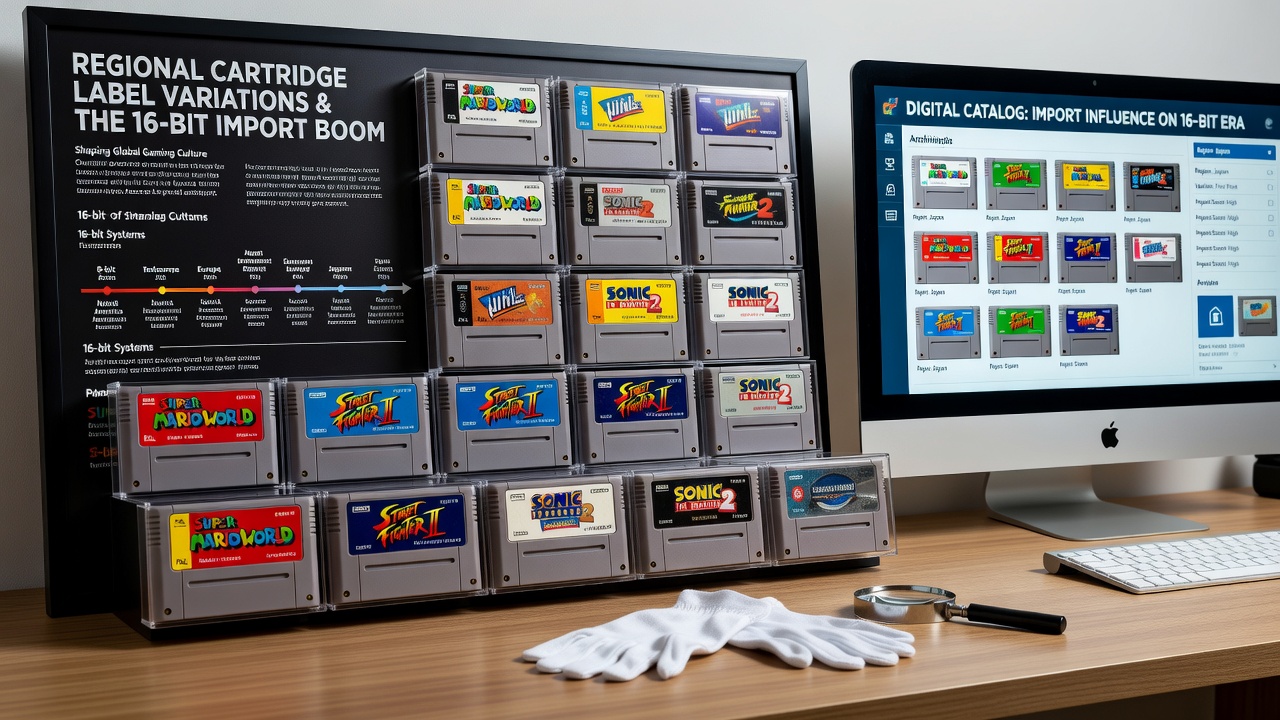
Regional Label Designs Emerge Alongside Console Launches
Manufacturers released 16-bit consoles between 1987 and 1991, and cartridge labels reflected distinct regional standards that developed in parallel with hardware distribution networks. Japanese Super Famicom cartridges carried artwork with bold kanji titles and character illustrations, whereas North American SNES versions used English text alongside rating symbols from the Entertainment Software Rating Board, and European Mega Drive releases incorporated PAL-specific color codes plus local language elements. These visual differences arose because companies adapted packaging to comply with local printing requirements and distribution agreements, while the underlying ROM data often remained identical across borders.
Collectors and importers began documenting these variations during the early 1990s because mismatched labels provided clear markers for identifying game origins without opening sealed packages. Research from the University of Alberta shows that label discrepancies helped importers verify whether a cartridge contained the original Japanese code or a localized version, which mattered when translation patches or hardware converters entered the picture.
Label Details Influence Import Practices
Importers relied on label features such as font styles, copyright notices, and color schemes to navigate gray-market channels that connected Japanese retailers with overseas buyers. A cartridge bearing the Japanese "HVC" code on its edge connector label typically indicated an earlier production run, whereas the American "SNS" prefix signaled a later localization, and these distinctions guided decisions about compatibility with region-free adapters. European versions often displayed additional warning text in multiple languages, which importers noted as evidence that the game had passed through secondary distribution hubs before reaching secondary markets.
Archival projects in August 2026 continue to catalog these markers because surviving stock from closed import shops still circulates through online marketplaces. Observers note that label wear patterns also reveal handling history, since Japanese domestic cartridges rarely received the same shipping stickers applied to export versions destined for North American or European ports.
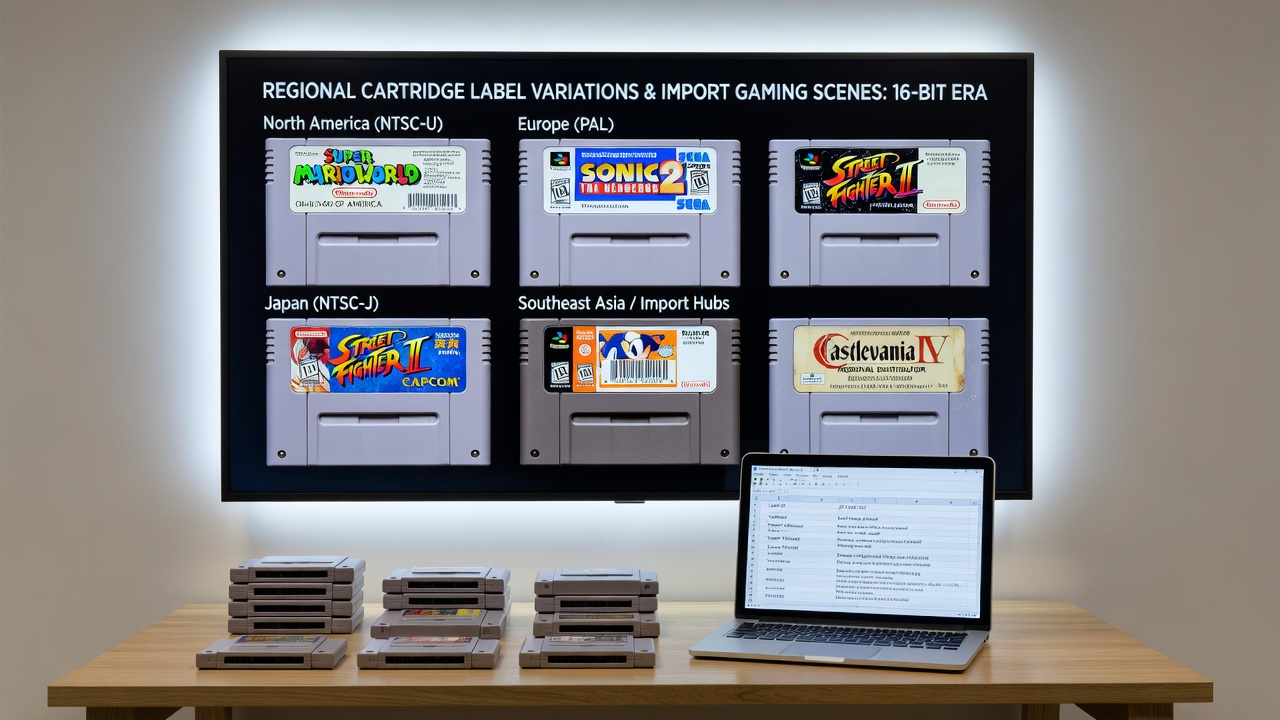
Community Documentation Efforts Expand
Preservation groups started compiling databases of label photographs and measurements once internet forums allowed widespread sharing of high-resolution scans. Participants photographed every angle of each cartridge, recorded paper stock thickness, and noted adhesive types because these physical traits sometimes distinguished legitimate regional releases from later counterfeits. Data compiled by the Japan Computer Entertainment Suppliers Association indicates that production runs for certain titles differed by several months across regions, which explains why some label variants appear in far smaller quantities today.
Those documenting the material found that minor spelling variations on back labels often corresponded to specific manufacturing plants, and cross-referencing these details with serial numbers helped map supply chains that supported import scenes. One study released through Canadian academic channels tracked how label artwork changes aligned with shifts in international trade regulations during the mid-1990s, revealing patterns that importers used to time bulk purchases ahead of anticipated stock shortages.
Impact on Collector Markets and Preservation
Label variations continue to affect pricing structures in secondary markets because collectors assign premiums to complete regional sets. Auction records demonstrate that a Japanese-labeled version of a title sometimes sells for less than its North American counterpart even when both contain identical gameplay data, largely because the visual presentation signals different production histories. Preservationists use these documented differences to authenticate cartridges donated to institutional collections, ensuring that archives maintain representative samples from each major territory.
Researchers have observed that label cataloging also supports emulation accuracy projects, since certain regional versions included unique startup screens or sound test modes that only appear when the correct label variant is matched to the correct ROM dump. Ongoing work in 2026 focuses on integrating label databases with existing ROM verification tools so that future users can identify the precise regional origin of any preserved cartridge image.
Conclusion
Regional cartridge label variations from the 16-bit era provided practical signals that shaped import logistics, collector priorities, and preservation strategies. Systematic documentation of these differences has produced detailed records that remain useful for verifying authenticity and tracing production timelines across multiple continents. Continued cataloging efforts ensure that the material evidence of how games moved between markets stays accessible for future study.