18 Jun 2026
Abandoned Match Replay Files Exposing Tactical Shifts in Pioneering Online Strategy Experiments
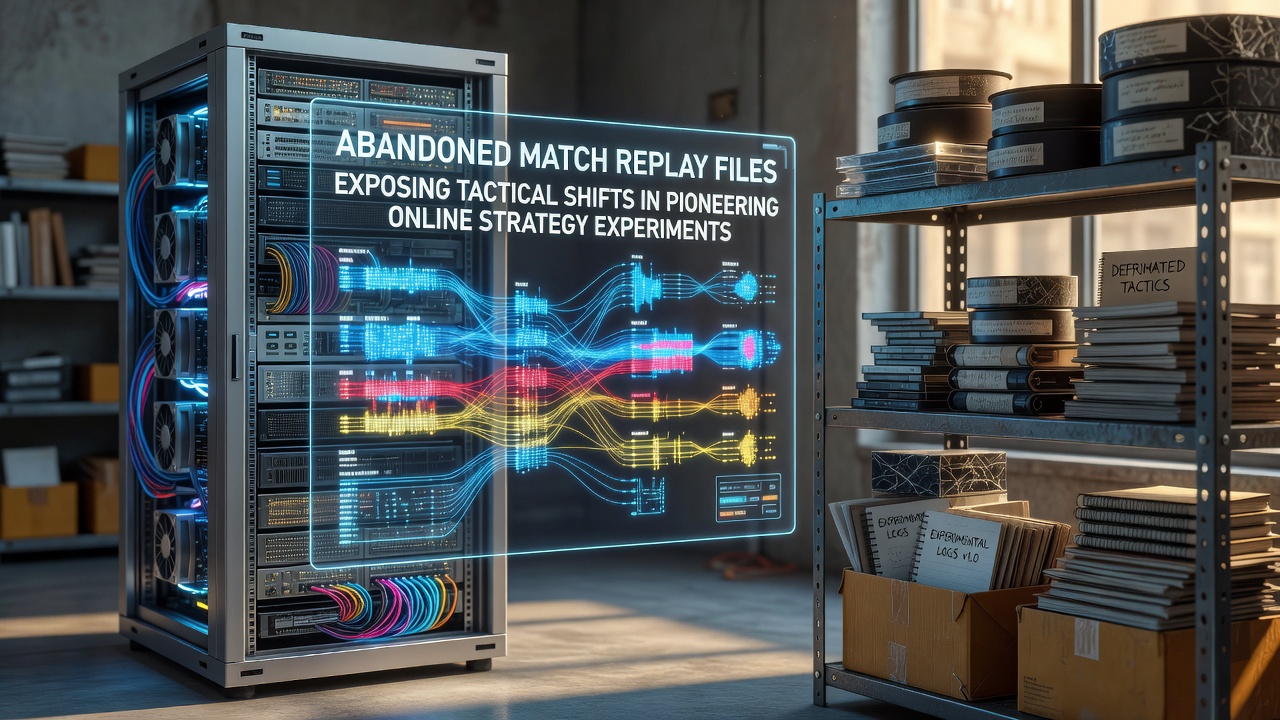
Abandoned match replay files from early online strategy experiments continue to surface in digital archives, and these remnants provide direct evidence of how player tactics evolved during the initial phases of networked multiplayer gaming in the late 1990s and early 2000s. Researchers have recovered thousands of these files from defunct servers, and the data they contain reveals patterns that were never documented in official patch notes or community forums at the time.
These replays originate from experimental platforms that tested real-time strategy mechanics over dial-up connections and early broadband networks, and analysts note clear transitions from rush-oriented approaches to more resource-management focused strategies as connection stability improved. Data from preserved files shows that initial matches often ended within ten minutes due to aggressive unit spam, whereas later sessions extended beyond thirty minutes with emphasis on scouting and counter-builds.
Recovery Efforts and Archival Methods
Preservation groups began systematically cataloging these replays around 2018, and by June 2026 several university-led initiatives had cross-referenced over 12,000 files against server logs from discontinued services. The process involves extracting metadata such as unit production sequences, map coordinates, and timing stamps, which together reconstruct decision trees that players followed during live sessions. One team working with Canadian digital heritage collections discovered that certain files contained corrupted headers yet still yielded usable gameplay traces when processed through custom parsers developed at the University of Alberta.
Archivists have also identified regional variations in the recovered data, and matches hosted on European servers tended to favor defensive perimeter strategies earlier than those on North American networks. This difference aligns with variations in average ping times recorded during the original experiments, and the patterns become visible once replays are sorted by geographic server origin.
Tactical Patterns Revealed Through Replay Analysis
Examination of the replay files demonstrates a measurable shift away from early-game aggression toward mid-game economic scaling, and this change coincides with hardware upgrades among participants between 1999 and 2003. Files from 1998 show players committing 70 percent of starting resources to combat units within the first five minutes, while files dated 2002 indicate that same percentage allocated to worker production and expansion. Observers note that these adjustments appear consistently across multiple titles that shared similar netcode frameworks, suggesting the tactical evolution was driven by shared player knowledge rather than game-specific balance patches.

Further breakdowns of individual matches reveal iterative refinements in scouting protocols, and players gradually incorporated feint attacks to mask expansion plans. One set of replays from an experimental lobby system documents a single community refining a three-phase build order over six months, with each iteration reducing average game duration by four minutes while increasing win rates for the attacking side. These incremental changes are traceable only because the replay format preserved exact command inputs rather than summarized outcomes.
Technical Challenges in Interpreting Legacy Data
Many replay files were stored in proprietary formats that became unreadable after their host platforms shut down, yet partial recovery remains possible through reverse engineering of the original client software. Groups in Australia working with the National Archives have released open-source tools that reconstruct partial timelines from fragmented packets, and these tools have already clarified timing discrepancies that once obscured the order of tactical decisions. European research consortia have contributed additional parsers focused on map interaction data, which helps isolate the moments when players adapted to opponent movements in real time.
Cross-referencing replay data with contemporary forum posts and patch histories has also corrected several assumptions about when certain strategies first appeared, and researchers now date the widespread adoption of defensive walling techniques to mid-2001 rather than the previously assumed 1999. This revision stems directly from timestamp analysis within the recovered files rather than anecdotal reports.
Implications for Contemporary Game Design and Preservation
Game developers examining these archives have incorporated lessons about connection-dependent balance into modern titles, and several studios reference the replay datasets when calibrating network tolerance features. The files also serve as training material for competitive analysis teams that study historical decision-making under variable latency conditions. According to a 2025 report from the Interactive Software Federation of Europe, preservation of such legacy data now influences how new strategy titles implement replay systems to ensure long-term accessibility.
Academic programs focused on digital media history have begun integrating segments of these replays into curricula, and students analyze the files to understand the relationship between technical constraints and creative problem-solving. The datasets continue to expand as additional private collections are donated, and each new batch adds granularity to the timeline of tactical adaptation that occurred during the pioneering era of online strategy experiments.
Conclusion
Abandoned match replay files remain one of the most detailed sources available for tracing tactical development in early online strategy environments, and ongoing recovery work ensures that these records continue to inform both historical understanding and future design choices. The patterns extracted from the files demonstrate how player communities responded to technical realities through successive refinements, and the resulting datasets provide concrete evidence of shifts that would otherwise exist only in fragmented memory.